
Slide 1

Serving South Florida

Slide 2
For over 40 years

Real Estate

Pros and Cons of Buying A Fixer-Upper

Buying a fixer-upper offers pros like lower purchase prices, less competition, and total customization for building equity, but comes with significant cons including hidden costs, major time commitments, unexpected problems (like bad wiring), and lifestyle disruptions from living through renovations, requiring deep pockets and patience to succeed. It’s a great investment if planned well but can become a “money pit” if you underestimate the work or skip due diligence like inspections.

A fixer-upper is best for those with patience, a strong budget buffer, DIY skills (or money for contractors), and a clear vision, especially if you can live in a partially completed home.

Pros of Buying a Fixer-Upper

  • Lower Purchase Price: Fixer-uppers typically cost 10% to 30% less than move-in-ready homes in the same area. This translates to a smaller down payment and lower monthly mortgage costs initially.
  • Access to Prime Locations: You can often afford the “worst house on the best neighborhood,” allowing you to move into desirable areas with top schools or transit that would otherwise be priced out of your budget.
  • Forced Equity: By improving the property, you can significantly increase its market value. If managed correctly, the final value of the renovated home can exceed your total investment (purchase price + renovation costs), building wealth quickly.
  • Full Personalization: Unlike move-in-ready homes where you pay for someone else’s style, a fixer-upper allows you to choose every finish—from the layout and flooring to the kitchen cabinetry—to match your exact taste.
  • Less Competition: Most buyers prefer “turnkey” properties, meaning have more leverage to negotiate the price or repair credits.

Cons of Buying a Fixer-Upper

  • Unexpected “Hidden” Costs: Even with a thorough inspection, opening walls can reveal expensive surprises like mold, outdated wiring, or structural issues. Experts recommend a 10% to 20% contingency fund for these surprises.
  • Complex Financing: Standard mortgages often won’t cover renovation costs. You may need specialized products like an FHA 203(k) loan or a Fannie Mae HomeStyle loan, which have stricter requirements and deadlines.
  • Timeline Disruptions: Renovations rarely finish on time. Delays from material shortages, contractor schedules, weather, or permit approvals can push your move-in date by months.
  • Lifestyle Impact: Living in a construction zone—dealing with dust, noise, and no functional kitchen—can be extremely stressful. If you choose to live elsewhere during work, you must budget for double housing costs (mortgage + rent/hotel).
  • Risk of Over-Improvement: If you spend more on renovations than the neighborhood’s ceiling value, you may struggle to recoup your investment when you eventually sell.

2026 Strategic Considerations

  • Tax Reassessments: Florida law requires that qualifying home improvements be assessed at their full market value as of January 1 following substantial completion. This means that the “Save Our Homes” (SOH) assessment cap, which limits annual increases on homesteaded properties to 3% or the Consumer Price Index (CPI), does not apply to the value of new construction or additions. To understand how a specific project might affect your property taxes, you should contact your local county property appraiser’s office, as standards can vary slightly by county.
  • Energy Credits: Look for federal or state tax credits for energy-efficient upgrades (e.g., heat pumps, solar, or insulation) to help offset costs.

The key is running your specific numbers with clear eyes, being honest about your cash reserves and available time, and understanding that sweat equity is real equity only if you actually have the skills, resources, and bandwidth to see it through.

Smart Home Checklist for Homebuyers

Smart Home Technology

When purchasing a home with smart home technology, it is import for your Realtor to include a list of every item that conveys with the sale of the property in the sales contract. This includes everything from motorized shades to pool equipment and everything in between. Brand and models should be identified and any exclusions listed in detail to avoid any unexpected surprises at walk-through.

Some common devices include:

  • Motorized shades/blinds (confirm number of units)
  • Smart thermostats (e.g., Nest, Ecobee)
  • Smart lighting systems (e.g., Philips Hue, Contol4, Lutron)
  • Smart speakers (e.g., Sonos, Amazon Echo, Google Home)
  • Smart doorbells (e.g., Ring, Nest)
  • Smart security cameras (confirm number of units)
  • Smart locks (ensure all keypads and physical keys are included)
  • Smart garage door openers
  • Pool equipment with smart features like automated cleaners, heaters, lighting, and more

Account Transfers and App Setup:

Once a smart home is sold, the new owner will need to take over the existing devices by linking them to their own accounts. Before closing, the seller should:

  • Remove their accounts from all smart devices
  • Reset all devices to factory settings
  • Provide transfer instructions or QR codes to easily link the devices to the new owner’s accounts
  • Release control of any associated apps (e.g., for smart speakers, doorbells, security systems, and pool equipment)

This step ensures that the buyer can smoothly take control of the home’s systems without relying on the previous owner’s settings or subscriptions.

It would be nice if the Sellers transfer any manuals and instructions. but in today’s world, everything is online and very little printed materials convey anymore. UTube is an excellent “how to” resource as well.

No devices ccan be set-up until you have internet and WIFI access. Make sure this is one of the first appointments you schedule post-closing.

Device Warranties & Service Contracts:

A smart home can come with long-term service agreements and warranties that should be transferred to the new owner. Sellers should:

  • Transfer any active warranties or service contracts for smart devices and pool equipment to the buyer.
  • Provide details on any subscriptions or paid services (e.g., security monitoring, cloud storage for cameras, or pool maintenance) and confirm when they expire or transfer.

By ensuring these contracts are smoothly handed over, the buyer will have peace of mind knowing that their new devices are fully supported.

Final Walkthrough: Test & Handover:

Before the sale is finalized, the seller or their listing agent should demonstrate how key smart devices work during the final walkthrough. This includes:

  • Demonstrating how to control motorized shades, cameras, and audio systems
  • Testing pool equipment, such as heaters, lighting, or automated cleaners
  • Handing over physical remotes, control panels, and keypads related to smart systems

A hands-on demonstration is the best way to ensure that buyers feel confident using their new smart home features.

New Home Construction Advice

New Construction Assistance

It’s important to understand when buying new construction,  that the builder’s agent is primarily focused on securing the best deal for the builder, often at the expense of the homebuyer. Their role is to persuade you to purchase their homes at the highest price with minimal concessions. In contrast, as your Exclusive Buyer Agent, Optima Properties is dedicated to leveling the playing field.

Our mission is to advocate for your best interests, ensuring that you receive the best possible terms for your home purchase. We are here to negotiate on your behalf, providing you with the knowledge and strategies necessary to navigate this complex process with confidence. While the builder’s agent is legally bound to represent the builder, we prioritize your needs and work tirelessly to make your home buying experience smooth and enjoyable.

Benefits of Using an Exclusive Buyer Agent for New Construction:

  1.  Compare and evaluate builders’ reputations and history of their construction quality and service
  2. Help you compare and evaluate advantages and disadvantages of new construction homes vs. resale homes
  3. Provide information about the community and compare and contrast with other new construction communities
  4. Help buyer evaluate which options should be done by the developer during construction and which are more affordable to be done by an outside vendor post-closing.
  5. Assist with design and structural selections that will optimize future resale value and livability.
  6. Assist buyer evaluate the selection of a building lot and options. Lot location and certain options have a direct correlation to resale value.
  7. Truly negotiate on behalf of the buyer. Many builders are offering “free” options and upgrades, but some are also making additional price concessions.
  8. Review the Agreement of Sale (PA) prior to buyer signing. This is not a legal review (only an attorney can do that), but an experienced agent will be able to spot terms and conditions that are atypical and of potential concern to the buyer. The agent may then be able to negotiate terms and conditions that are more favorable to the buyer but still acceptable to the builder. Keep in mind most new construction contracts are written by attorneys that represent the developer and these contracts are therefore heavily weighted in favor of the builder.
  9. Recommend a real estate attorney for final contract, title commitment and to hold your escrow funds.
  10. A buyer’s agent serves as an extra set of ears as a witness at court or arbitration – When the builders sales representative is familiar with all rules, features and prices and it’s all new to buyer – it is good to have experienced person on buyer’s side listening with buyer and taking notes, a lot of information is verbalized in short period of time.
  11. Attend the signing of the Agreement of Sale
  12. Assist with the buyer’s financing and review financing paperwork. This is especially important if the builder is tying “free” options and upgrades to the use of a builder-affiliated lender.
  13. Check on the property during construction and keep a photo record at different stages.
  14. Be your leverage with the builder as problems arise during construction
  15. Keep everything in writing – Sometimes even the very nicest builder makes verbal promises that later become a point of contention. An experienced buyer’s agent is conditioned and trained to “put it in writing” even though at the time it doesn’t seem necessary.
  16. Arrange for a final inspection with a license building inspector and generate a “punch list” to be completed before final closing.
  17. Document and help resolve any issues with construction, financing, title, etc. throughout the process.
  18. Attend a pre-settlement walkthrough with the buyer to make sure that all items are satisfactorily completed or that a proper punch list is established to assure completion after settlement
  19. Obtain and review a preliminary HUD-1 settlement statement to be sure it is accurate and advise the buyer of the amount needed for settlement.
  20. Assist buyer with utilities, insurance, security and HOA requirements, decorators, service professionals, schools, et. al.
  21. Attend final walk-through and settlement with the buyer.
  22. A buyer’s agent will be there even after the home closes. It is routine for issues to arise during the first year of a new home. Site agents tend to forget a buyer’s name after the contract is signed.

But it’s important to remember the process of working with a builder is different than buying from a homeowner. And, while builders typically have sales agents on-site, having your own agent helps make sure you have proper representation throughout your home buying journey.

Tariffs And Effect On Housing Market

Tariffs, particularly on building materials like lumber, steel, and appliances, are expected to increase construction costs and potentially lead to higher home prices, impacting both new home construction and renovations.

Redfin reported that instability caused by the new tariffs will almost certainly cause volatility in mortgage rates and make the path of rate cuts from the Federal Reserve (previously forecasted as two or three 25-basis point reductions) more uncertain. Short-term economic damage is also expected to push up unemployment and inflation.

Chen Zhao, who leads the Redfin economic team, said that the odds of a recession in the next 12 months rose from 15% at the start of 2025 to 40% after the latest tariffs.

Tariffs are causing:

·      Increased Construction Costs:

Tariffs on imported building materials, such as lumber, steel, and appliances, are expected to drive up the cost of these materials, leading to higher construction costs.

·      Higher Home Prices:

The increased construction costs are likely to be passed on to consumers in the form of higher home prices, making it more difficult for potential buyers to afford homes.

·      Impact on Homebuilders:

Homebuilders are facing the challenge of rising material costs, which could lead to reduced profit margins or even delays in construction projects.

·      Supply Chain Disruptions:

Tariffs could disrupt the supply chains for building materials, potentially leading to shortages and further price increases.

Affordability Concerns:

The combination of rising home prices and mortgage rates could exacerbate affordability concerns for potential homebuyers, especially those in the middle-class.

·      Renovation Costs:

Tariffs could also impact the cost of home renovations, as imported materials and fixtures become more expensive.

  • The National Association of Home Builders estimates that the cost of building materials has already risen by 34% since December 2020, far higher than the rate of inflation.
  • Builders estimate a typical cost effect from recent tariff actions at $9,200 per home.
  • Some experts predict that household fixtures, such as appliances, lighting, and cabinetry, could increase 10-20%.

That larger economic picture might be the biggest indirect threat to housing, as consumers pull back from big decisions like buying or selling homes. Overall, annual home sales have failed to recapture a significant post-pandemic reduction, which was characterized by some economists as a “housing recession.”

But economists have also largely attributed the relative resilience of the housing markets over the last couple years to a strong labor market. A recession with a significant uptick in unemployment would certainly have a major impact on housing.

Preparing For A Relocation

Most people relocate to South Florida for a few reasons. Retirement, job opportunity, second home, tax savings, lifestyle, and to be closer to family to name just a few.

Relocating to a new state or region can feel overwhelming, especially when it comes to settling into an unfamiliar community. Whether you’ve moved locally before or this is your first big relocation, there’s more to it than just packing boxes and changing addresses.   Finding the right city or neighborhood will make all the difference in your satisfaction with your decisions.

Here are a few  key tips to help make the relocation transition smoother, from using online resources to connecting with locals, so you can start feeling at home before you even move.

If you have moved locally before, you know the bureaucracy that comes with every move:

  • Change your address on your driver’s license and other ID
  • Register to vote, if you are a citizen or becoming a Florida resident
  • Move your utility services to the new location
  • File a post office change of address
  • Register your children in the local school
  • Find new doctors…and more

Just like when you are moving locally, there will be lifestyle activities that you should explore before moving:

  • What is the commute between work and home, school and home?
  • Does the new location have access to activities you enjoy now?
  • Where are the religious or social centers like those you belong to now?

How to explore potential places that I’ll enjoy in the new region.

Use Internet Resources: Start by seeking out the types of local information you rely on now, but specific to your new location.

Explore online news outlets like THE PATCH or local newspapers.  Join local social media groups, which often give a sense of the community. Just like in your current area, you’ll find a mix of people—some helpful, some not—but these groups can offer valuable insights.

Check out religious and cultural organizations that align with your interests. Their websites often list their mission and activities calendars, which can help you connect with like-minded people even before you arrive. Many also offer newsletters or online communication platforms that are great for staying in the loop. Research schools, crime statistics, demographic information, weather and more to fully understand how a move will impact your way of life.

Networking: Start by asking friends, family, or colleagues if they know anyone in your new area. Personal introductions can be invaluable in helping you get settled and learn more about your new community.

Pre-move Vacation: Consider spending a week or two in your new town or city to get a feel for the place. Use this time to meet with people who can assist with your move and try out activities you already enjoy—whether it’s sports, theater, religious services, hiking, or even attending a local event. Engaging in these activities will help you connect with locals and give you a sense of whether the area aligns with your lifestyle.

Consider a Two-Step Move: Evaluate whether it’s less stressful to rent for a year before buying a home. Each approach has its own benefits, costs, and challenges. Renting allows you to test the waters, while buying right away offers a sense of permanence—but either way, the decision should be based on your comfort level and finances.

Develop a Relationship with a Local Exclusive Buyer’s Agent: A local exclusive buyer’s agent is a valuable resource when moving to a new area. They have in-depth knowledge of the region and can guide you to community activities and resources that will ease your transition. Their expertise can help you navigate your home search while also connecting you with local networks.

Understanding ‘Replacement Cost’ in Your Home Insurance Policy

Homeowners Insurance

Homeowners Insurance

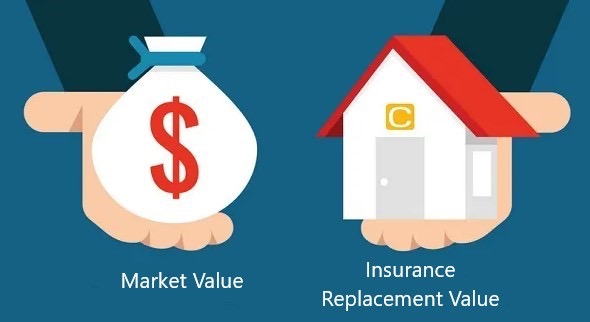
With the recent “disasters” nationwide, it has become clear to me that very few homeowners understand that they need to ensure that their policies cover replacement cost for their homes.  To ensure that you can rebuild your house at the current market costs and codes, you MUST have replacement cost valuations and insurance coverages.

Whether you are dealing with missing tiles on the roof or a collapsed ceiling, knowing how replacement cost works can mean the difference between making do with quick fixes or restoring your home to its original condition.

Replacement cost is an option you usually choose when purchasing or renewing your homeowner’s insurance policy. It’s one way of valuing the property being insured – so it will affect how much your insurance pays out for a covered claim. Depending on the insurer and the policy you are getting, you may be able to choose replacement cost when insuring your home and roof (the dwelling itself), unattached structures (such as a shed, fence, detached garage, and pool), and your personal property (furniture, electronics, clothing, etc.).

Let’s say a hurricane sweeps through your neighborhood and leaves you with a seriously damaged roof. If your roof is covered at replacement cost in your policy, it means just what those words imply: Your roof will be covered for the amount of money it takes to repair/replace the damaged roof – using new material, of a similar kind and quality as your existing roof, without subtracting any depreciation based on the age and condition of your roof prior to the hurricane. In other words, replacement cost is about getting you back to the way things were, as if no storm had ever happened.

Choosing replacement cost in your home insurance policy for your dwelling and personal property is all about giving you enough to actually replace what you lost, whether it’s your roof, furniture, or the entire home.

How Is ‘Replacement Cost’ Different From ‘Actual Cash Value’?

While replacement cost gives you enough to rebuild or replace your items as new, actual cash value factors in depreciation. This means you’ll get the current value of your items – after subtracting certain amounts based on the property’s age, condition, and how outdated or obsolete it is at the time of the loss. The actual cash value approach might save you some money up front, on insurance premiums – but when it comes time to file a claim, it can leave you filling in the gap to fund repair costs

What About ‘Stated Value’?

Another valuation method is stated value. This is when you and your insurer agree on a specific value for your home or certain parts of it – such as your roof or certain high-value items – before any damage occurs. Then, when you make a claim, you’ll be reimbursed for the already agreed-upon value of the property. It’s a straightforward valuation method and it eliminates any haggling over depreciation during the claims process.

Why Replacement Cost Matters

In South Florida, natural disasters are a part of life. Between hurricanes, tropical storms, and the occasional fire, having the right kind of insurance coverage can make or break your ability to rebuild after a disaster.

With replacement cost coverage, you know you’ll have the funds to get back to normal. The difference in payout could run in the thousands to tens of thousands of dollars.  You need to evaluate your risk tolerance and financial ability to restore your property to determine which level of insurance coverage is best for you.

Preparing For A Relocation

Florida Relocation

People relocate to South Florida for a few reasons; retirement, job opportunity, second home, tax savings, lifestyle, and to be closer to family to name just a few.

Relocating to a new state or region can feel overwhelming, especially when it comes to settling into an unfamiliar community. Whether you’ve moved locally before or this is your first big relocation, there’s more to it than just packing boxes and changing addresses.   Finding the right city or neighborhood will make all the difference in your satisfaction with your decisions.

Here are a few  key tips to help make the transition smoother, from using online resources to connecting with locals, so you can start feeling at home before you even relocate.

If you have moved locally before, you know the bureaucracy that comes with every move:

  • Change your address on your driver’s license and other ID
  • Register to vote, if you are a citizen or becoming a Florida resident
  • Move your utility services to the new location
  • File a post office change of address
  • Register your children in the local school
  • Find new doctors…and more

Just like when you are moving locally, there will be lifestyle activities that you should explore before moving:

  • What is the commute between work and home, school and home?
  • Does the new location have access to activities you enjoy now?
  • Where are the religious or social centers like those you belong to now?

How to explore potential places that I’ll enjoy in the new region.

Use Internet Resources: Start by seeking out the types of local information you rely on now, but specific to your new location.

Explore online news outlets like THE PATCH or local newspapers.  Join local social media groups, which often give a sense of the community. Just like in your current area, you’ll find a mix of people—some helpful, some not—but these groups can offer valuable insights.

Check out religious and cultural organizations that align with your interests. Their websites often list their mission and activities calendars, which can help you connect with like-minded people even before you arrive. Many also offer newsletters or online communication platforms that are great for staying in the loop. Research schools, crime statistics, demographic information, weather and more to fully understand how a move will impact your way of life.

Networking: Start by asking friends, family, or colleagues if they know anyone in your new area. Personal introductions can be invaluable in helping you get settled and learn more about your new community.

Pre-move Vacation: Consider spending a week or two in your new town or city to get a feel for the place. Use this time to meet with people who can assist with your move and try out activities you already enjoy—whether it’s sports, theater, religious services, hiking, or even attending a local event. Engaging in these activities will help you connect with locals and give you a sense of whether the area aligns with your lifestyle.

Consider a Two-Step Move: Evaluate whether it’s less stressful to rent for a year before buying a home. Each approach has its own benefits and challenges. Renting allows you to test the waters, while buying right away offers a sense of permanence—but either way, the decision should be based on your comfort level and finances.

Develop a Relationship with a Local Exclusive Buyer’s AgentA local exclusive buyer’s agent is a valuable resource when moving to a new area. They have in-depth knowledge of the region and can guide you to community activities and resources that will ease your transition. Their expertise can help you navigate your home search while also connecting you with local networks.

Renovations With a Strong Return on Investment

Renovations that make homeowners and residents of a home happy are always worth the investment. Though it’s certainly true that projects that create more functional, usable space and add comfort and convenience are worth the price, such renovations are even more beneficial if they provide a good return on homeowners’ financial investment ( ROI).

Returns on investment (ROI) are often cashed in when homeowners put their homes up for sale, and each year Remodeling magazine releases its “Cost vs. Value Report,” which considers a wealth of data across the United States to determine which renovations return the highest percentage of homeowners’ financial investment.

According to the “2024 Cost vs. Value Report,” the following are projects that provide a strong return on investment (ROI):

Enhance curb appeal:First impressions matter, so improving your home’s curb appeal can significantly impact its value. Simple upgrades such as landscaping, exterior painting, and installing a new entry door can make a substantial difference. According to industry experts, enhancing curb appeal can yield an ROI of up to 200%.

Garage door replacement:  The average job cost for this project is slightly more than $4,500 but the project is valued at $8,751, providing an especially high 194% ROI.

Steel door replacement: Remodeling magazine notes that a steel entry door replacement is worth double what it was worth in 2023. This project offers a 188% ROI on an average investment of $2,355.

Manufactured stone veneer: A manufactured stone veneer is a man-made product that appears as if it’s natural stone. Many homeowners prefer manufactured stone veneer to natural stone because of the price, as the former is less expensive and easier to install, which means lower labor costs as well. The comparatively low cost of manufactured stone veneer is perhaps one reason why it averages a roughly 153% ROI on an average cost of just more than $11,000.

Minor kitchen remodel: According to the “2024 U.S. Houzz & Home Study” from Houzz Research, kitchens were the most popular rooms to renovate in 2023. There’s no denying the appeal of a newly renovated kitchen, and homeowners considering such a project may be happy to learn that a minor kitchen remodel that costs an average of around $27,000 provides a 96% ROI.

Renovate bathrooms:Bathrooms are another high-impact area for home improvements. Remodeling a bathroom can provide a return on investment of around 81% for an addition and approximately 71% for a complete renovation.

Simple upgrades to bathroom fixtures can also go a long way in improving your home’s value. Consider replacing outdated faucets, showerheads, and toilets with modern, water-efficient options. This improvement offers a high return on investment and enhances your bathroom’s overall look and functionality.

Roof Replacement: A well-maintained roof is essential for any home and replacing an old or damaged roof can significantly increase its value. Additionally, a new roof provides peace of mind for potential buyers. Roof replacements offer a high return on investment, with homeowners recouping the entire cost.

Install Smart home and Home Security Technology: Smart home technology is becoming increasingly popular among homeowners. Integrating features such as smart thermostats, lighting systems, and security cameras can enhance the appeal and value of your home. Smart home features offer a return on investment of up to 10%.

Investing in smart home security measures will enhance your peace of mind and increase your home’s value. Upgrades such as motion sensor lighting and sturdy locks can make your home more attractive to potential buyers. Smart thermostats are becoming increasingly popular, as they offer several benefits, such as energy savings and remote control. Installing a smart thermostat can increase the value of your home by up to 3%.

When considering home improvements in Florida, focusing on projects that offer the best return on investment is crucial. Enhancing curb appeal, upgrading key areas such as the kitchen and bathroom, and investing in energy-efficient features are all smart choices. Strategic improvements can increase your home’s value and attract potential buyers in the competitive Florida real estate market.  Remember to consult with local professionals to ensure that you choose improvements that align with the preferences and needs of Florida homebuyers.

NAR August 17th Deadline. What Florida Buyers Need to Know.

Certified Exclusive Buyer Agent

As required by the recent National Association of Realtors Settlement Agreement, starting August 17th, 2024, all real estate brokers providing brokerage services to a buyer will be required to have the buyer execute an Exclusive Buyer Brokerage Agreement before touring any homes.

Buyers should know that after Aug. 17:

·      If you are a buyer and your agent is using an MLS, you will need to sign a written agreement with your agent before touring a home so you understand exactly what services will be provided and for how much.

·      Written agreements are required for both in-person and live virtual home tours.

·      You do not need a written agreement if you are just speaking to an agent at an open house or asking them about their services.

·      Agent compensation for home buyers and sellers continues to be fully negotiable.

An Exclusive Buyer Brokerage Agreement is a contract between a real estate broker and a potential homebuyer. Florida has 4 different variations of the Agreement. The Agreements differ by the type of representation provided by the Broker, including single agent, transaction broker, single agent with consent to transition to transaction broker, and no brokerage relationship. Under each Agreement, the buyer commits to working exclusively with the Broker in their search for a property in exchange for a commission paid by the buyer to the Broker, with certain caveats. In return, the Broker agrees to represent the buyer’s interests, providing professional advice, market insights, and negotiation skills to secure a contract for the buyer.

Florida’s Exclusive Buyer Agreements:

  • Exclusive Buyer Brokerage Agreement–single agency:

This agreement may be used when a broker wishes to act as a buyer’s agent and be paid commission by the buyer. It establishes an exclusive, single agency representation with a buyer and provides for a retainer fee.

  • Exclusive Buyer Brokerage Agreement–transaction agency: This form may be used when a broker wishes to act as a buyer’s agent and be paid commission by the buyer. It establishes an exclusive, transaction agency representation with a buyer and provides for a retainer fee.
  • Exclusive Buyer Brokerage Agreement–no brokerage relationship:

This form may be used when a broker wishes to act as a buyer’s agent and be paid commission by the buyer. It establishes an exclusive, no brokerage agency representation with a buyer and provides for a retainer fee.

  • Exclusive Buyer Brokerage Agreement–transition from single agency to transaction agency: This form may be used when a broker wishes to act as a buyer’s agent and be paid commission by the buyer. It establishes an exclusive, single agency representation with a buyer and provides for a retainer fee, with a right to transition into transaction agency.
  • Showing Agreement (SA-3x): This form may be used to create a buyer’s commission agreement based on a one-time showing of property.

The form of representation a buyer or seller selects will bind the entire brokerage and not just an agent/licensee working at the firm. A buyer wanting single agent representation binds the entire brokerage to a single agent relationship.

Florida does not permit dual agency so if there is a home listed by the same firm, the single agent would have to slide back, with your consent, to being a transaction broker.

Many brokerage firms do not permit single agent representation as a company policy for several reasons. The possibility of selling “in-house” properties is hampered if single agency is utilized to any extent. Less talked about and a more significant reason why larger brokerages only all transaction brokerage is the fact that higher levels of service require a higher level of knowledge by all agents in their firm. The lack of experience is a source of higher liability to the brokerage.

Florida Statute Regarding Brokerage Relationships