
Slide 1

Serving South Florida

Slide 2
For over 40 years

Posts Tagged ‘homebuyer advice’

Beware Of Real Estate Scams

Real estate scams, including wire fraud, title theft, and fake listings, are increasingly common. Scammers impersonate professionals to steal funds or personal information, often using phishing or spoofed emails to steal closing costs or forge ownership documents. Protect yourself by independently verifying all wire instructions via phone and watching for urgent requests or too-good-to-be-true deals.

Scammers might use deepfake-generated audio or video to impersonate buyers, sellers, real estate agents, real estate lawyers, title agents or other professionals.

Common Real Estate Scams

  • Wire Fraud: Fraudsters hack emails or spoof agents/title companies to send fake wiring instructions for closing costs and down payments.
  • Title/Deed Fraud: Scammers forge documents to transfer ownership of a property into their name, often targeting vacant lots or rental properties.
  • Rental/Vacant Land Scams: Fraudsters list homes or land they do not own for rent or sale, collecting deposits from unsuspecting victims.
  • Foreclosure Relief: Scammers charge upfront fees promising to save homes from foreclosure, but do not provide any real help.
  • Loan-flipping Scam: Scammers often target seniors by convincing homeowners to refinance their mortgage repeatedly. Each time they refinance, the borrower is charged elevated fees, a high interest rate, and expensive closing costs.
  • Seller/Buyer Impersonation: Criminals pose as legitimate sellers (often via email only) to sell property quickly or pose as buyers to gather personal information.

Warning Signs and Prevention

  • Verify Independently: Always call your escrow agent or attorney to verify wiring instructions using a trusted, independent phone number before sending money.
  • Be Skeptical: Be wary of urgent, last-minute changes to financial instructions.
  • Check Property Ownership: Contact your local county recorder’s office to confirm the seller is the legal owner.
  • Inspect In-Person: Do not purchase or rent a property you have not seen in person.
  • Beware of “Too Good to Be True”: Extremely low prices or demanding quick, high-dollar payments are major red flags.
  • Work with trusted, licensed professionals. Always partner with real estate agents and lenders who are licensed and have strong reputations. If someone reaches out unexpectedly, take the time to verify their credentials before sharing any information or moving forward.

If you become a victim, report the fraud to the FBI’s Internet Crime Complaint Center (IC3) immediately, along with your bank and local law enforcement.

 

What Recent NAR Settlement Means for Home Buyers

The Department of Justice, in its regulatory capacity, has recently intervened to reshape commission structures, a move that will trigger a multitude of changes, especially for home buyers.

The National Association of Realtors ( NAR) settlement has not yet been accepted. It is proposed to go into effect at the end of June to mid-July.

The results of the NAR Settlement means that:

1.    NAR owned multiple listing services ( MLS) are prohibited from sharing offers of compensation to Buyers.

2.   MLS members are required to enter into written agreements with the buyers disclosing how they will be paid and by whom before showing a property.

What are Multiple Listing Services (MLS)? They are database platforms that agents and brokers pay to subscribe to. The agents and brokers use it to share information about properties for sale. Subscribers agree to rules about cooperating with and compensating all brokers who subscribe to it. If you are seeing listings on other sites (like Zillow), chances are, those sites are getting a feed from their local MLS.

Since the beginning of buyer agency, the buyer broker’s commission has been built into the sale price of the property. The buyer paid for the house and the seller paid outstanding bills, then collected their profit. Responsible seller’s brokers used a form called a “net sheet” to show sellers what their final profit was. Broker fees were deducted from the sale price along with taxes, water bills, or other costs of the sale.

The MLS system built commissions into the price. The seller, through their broker, published their offered commission to buyer’s broker on the MLS.

If the settlement is accepted and all offers of compensation are removed from the MLS system, we need ways that buyers can continue to pay our fees without undo burden.

1.   Include the Buyer Broker Fee in the Offer and request that it be included in the Sales price. This creates a way that the buyer broker commission is paid for in a mortgage, as part of the house purchase. Functionally, this is exactly the same as it has been. The buyer pays for the house, and the buyer’s broker fee is subtracted from the seller’s profit at closing.

2.   Lenders are seeking ways to create financing options for buyers, so that they can finance the buyer broker commission, if it is not included in the sale price.

3.   Buyers to pay the Buyer Broker fee outside of Closing or as a disbursement at Closing, though not reflected in the sales price. This is de minimis for cash Buyer but requires that a Buyer getting a loan have more cash to close.

Home Buyers will no longer have representation costs built into the real estate transaction when a property is listed through the MLS system and represents a property for sale by a licensed real estate agent, but Sellers will.

Buyers or their agents will have to approach Seller and ask permission to include the cost of representation within the transaction. Sellers have all the power to withhold their permission for the Buyer to do so. Seller’s representation costs, however, will continue to be included in the transaction, using the Buyer’s funds to pay for them.

Every Buyer will be obligated to sign an Exclusive Buyer Agreement in advance of being shown homes that specifies payment terms when seeing a home that is listed by a real estate agent, EVEN IF THE REAL ESTATE AGENT SHOWING THE HOME IS THE LISTING AGENT. THIS IS DUAL AGENCY!

Payment can be made directly by the buyer outside of the transaction, included in an offer to the seller requesting a credit to cover the expense, or through a commission offered by the listing agent. However, commissions won’t be advertised as part of the transaction on the Multiple Listing. Fee arrangements with the client may include an hourly fee, a lump sum fee, or a percentage-based commission.

This is a particular disservice to homebuyers requiring a loan. Buyers will have to pay their own agent out of pocket, on top of a down payment and other closing costs. Finding thousands of dollars to pay an agent could be a challenge, especially for first-time buyers, who typically have limited funds and also the greatest need for an agent’s guidance. VA Loans currently prohit paying a Buyers Agent directly by the Buyer.

The trickle effect resulting from this barrier to entry for first time homebuyers or move up home buyers will likely affect the economy negatively in the near term. Home buying and construction drives jobs, manufacturing, retail and more.

Removing the buyer’s representation cost from the transaction but leaving the seller’s representation cost in is extremely one sided and unfair.

Florida has more real estate agents than any state in the US and over 99.9% of agents in Florida are transactional agents who don’t represent the buyer or seller in a fiduciary capacity. According to Florida statutes, unless an agent establishes a single agent or no brokerage relationship with a customer in writing, they are by default considered transaction brokers.

The Florida Legislature some time back rewrote a law to say that if you’re a fiduciary agent, you have to disclose that, but if you’re transactional broker, you don’t have to. Why is transactional brokerage so attractive to the agents? It is because you don’t have the legal liability, you don’t have the responsibility that a fiduciary agent has.”

Optima Properties is a member of the National Association of Exclusive Buyer Agents

(NAEBA.org) and never represent Sellers. Optima Properties does not list or sell houses and never practice Dual agency. Optima Properties will never ask homebuyers (clients) to sign a “consent form” asking them to switch to another “Designated Buyers Agent or Dual Agent” within the team or same real estate brokerage in the middle of a real estate transaction because the buyer is interested in making an offer on one of their company’s real estate listings.

Click Here for a list of

“100 Services Provided to Home Buyers”

by Optima Properties

Termite Awareness Week- March 10-16, 2024

Florida is home to over twenty different species of termites with the most damaging and common species are subterranean and drywood termites. These termites cause billions of dollars of damage annually in the United States and correct termite identification is pivotal to successful prevention, control, and protection of your home.

Subterranean termites live and invade from underground, and a single colony can cover one acre underneath
homes. They typically live in dark, moist, hidden environments underground but will create and live in carton
nests aboveground. These can be found in walls and attics of structures and in nearby trees. To move above the
ground, these termites build mud tubes on foundations, walls, and nearby trees. These mud tubes are a sign
of termite activity and used for detection.

Drywood termites live and forage in dry wood. There are many different species of drywood termites in Florida,
and these are located throughout the state. They enter structures through swarming from infested trees, stored
wood, or other structures near your home. Unlike subterranean termites, drywood termite colonies grow
slowly and thus do not cause as much damage as subterranean termites. A tell-tale sign of drywood termites are
sawdust-like piles near the infestation, these piles are hexagonal shaped pellets or waste of the termite.

Actions you can take to keep air home termite free are:

  • Eliminate sources of standing water in or near the home.
  • Be wary of areas in the home where wood is in contact with soil.
  • Keep piles of lumber or firewood away from your home.
  • Regularly inspect your deck, patio, or outdoor furniture for signs of damage.
  • Remove decaying trees and branches from areas surrounding your yard.
  • Use pine needles, pea gravel, rubber, or other non-organic material as mulch.

Part of your Inspections before purchasing a home should include Wood Destroying Organisms ( WDO) Inspection. Unlike most states, the Florida Department of Agriculture and Consumer Services (FDACS) requires the licensed WDO Inspector to report on Wood Destroying Organisms.

The Department of Agriculture and Consumer Services recommends that you hire a licensed pest control company for correct termite identification and protection for your home. You can find out if a company is licensed in Florida at: https://www.fdacs.gov/Business-Services/Pest-Control. For more info and tips: https://www.fdacs.gov/Consumer-Resources/Health-and-Safety/Protect-Your-Home-from-Pests/Termites.

Benefits of Energy Efficient Homes

A recent survey from the National Association of Home Builders (NAHB) found that energy-efficient features are among the most sought-after “must-haves” among homebuyers. Among those surveyed, 83% desired Energy Star-rated windows, 81% wanted Energy Star-rated appliances and 80% preferred energy-efficient lighting.

Though eco-conscious sensibilities compel millions of homeowners to make their homes more energy-efficient, that’s not the only reason to upgrade your home. The following are a handful of the many benefits of energy-efficient homes.

Save money: The U.S. Department of Energy indicates upgrading to energy efficient appliances products can help homeowners reduce their energy costs by as much as 30%. The Environmental Protection Agency (EPA) estimates you can save 11% on average on your total energy costs by air sealing your home and adding insulation in the attic and crawl spaces.

Improve resale value: Being able to market your home as energy-efficient when it comes time to sell it may help your resale value, especially as energy-efficient homes become better-known and more in-demand.

According to several studies, energy-efficient homes and apartments garner anywhere from 2% to 8% more in sales prices than their traditional counterparts. Research from the mortgage lender Freddie Mac found that homes with energy-efficient ratings sold for nearly 3% more on average than homes without such ratings.

Live healthier: The benefits of energy-efficient homes aren’t just economic, though health-related benefits certainly produce an economic incentive as well.

Energy-efficient homes boost your comfort level by also enhancing the indoor air quality by reducing pollen, dust, insects, and humidity, which leads to better quality of life.

Energy-efficient appliances are typically quieter than traditional models, as well, making their operation less intrusive to your daily life.

To learn more and find out how to perform some of these improvements yourself, visit DOE’s Energy Saver website.

Tools and Calculators for Homes:

Information, tools, and resource to help consumers seal and insulate their homes, including a DIY Guide to Sealing and Insulating with ENERGY STAR.

Information, tools, and resources to help consumers assess their home’s energy use, including the ENERGY STAR Home Advisor and the ENERGY STAR Home Energy Yardstick.

List of building energy software packages, some of which are available for free or a small fee.

A tool that allows a consumer to determine energy savings and costs associated with replacing non-ENERGY STAR-rated refrigerators.

Information, tools, and resources to help consumers increase the efficiency of their home’s heating and cooling system.

A tool developed as an industry-consensus roof savings calculator for residential and commercial buildings using whole-building energy simulations.

Tips to Reduce Home Insurance Costs in South Florida?

Homeowner's Insurance
Are you a home buyer in Florida looking to save money on your insurance costs? Here are some expert tips to help you reduce your home and wind insurance expenses.
Shop Around: Don’t settle for the first insurance quote you receive. Take the time to compare prices from multiple insurers. By doing so, you can find the best coverage at the most competitive rates.
Increase Deductibles: Consider raising your deductibles to lower your premium. While this means you’ll pay more out of pocket in the event of a claim, it can significantly reduce your monthly insurance costs. Make sure you take on a deductible that won’t leave you financially overwhelmed when you need to make a major claim.
Improve Home Security: Installing security measures such as alarms, deadbolts, and smoke detectors can make your home safer and lower your insurance premiums. Insurers often offer discounts for homes with enhanced security features.
Bundle Policies: If you have multiple insurance needs, consider bundling your auto, umbrella, home and wind insurance with the same provider. This can lead to substantial savings on your premiums.
Maintain a Good Credit Score: Believe it or not, your credit score can affect your insurance rates. Pay your bills on time, keep your credit utilization low, and regularly check your credit report for errors to maintain a good credit score and potentially lower your insurance costs.
Consider Wind Mitigation Measures: Living in Florida means being prepared for hurricanes. By fortifying your home against wind damage with measures like impact-resistant windows and reinforced roof trusses, you can qualify for wind mitigation discounts.
Avoid Making Small Claims: While insurance is designed to protect you from significant financial losses, making multiple small claims can lead to higher premiums. Consider handling minor repairs out of pocket to avoid impacting your insurance rates.
Look for Discounts: t’s easy to miss a discount you’re eligible for. Homeowners often have the stress of the home-buying process in the background when they get coverage, meaning insurance could be one thing hurriedly checked off the list. You can qualify for discounts if you:
  • Have a residence with no smokers
  • Pay your premium upfront
  • Pick paperless billing
  • Sign up for automatic payments
Remember, every insurance policy is unique, so it’s essential to speak with a qualified insurance agent to find the best ways to lower your home and wind insurance costs in Florida. Don’t let high premiums take away from the joy of homeownership – take action today and start saving!

Planning for 2023 As Mortgage Rates Rise

Mortgage Rates

If you’ve been house-hunting in recent years, you’ve really been through it. Maybe you were waiting out the market, hoping the rocketing prices would start to flatten. Now, of course, they have — but between 2021 and 2022, mortgage rates have more than doubled, from less than 3 percent to more than 7 percent.

If you are renting and trying to save for a down-payment, the cost of your rental has likely increased as well.

Sellers who are sitting on low mortgage rates are not listing their homes for sale and supply shortages, cost of land, and cost of lending, along with higher labor and building costs have slowed down new construction.

All these factors contribute to a continued shortage of desirable inventory and home prices are staying propped up and not decreasing as one would expect.

Buyers need to adjust their expectations…Every buyer needs to do a gut check on how much house they can afford now. That might seem daunting, but higher mortgage rates don’t have to derail your dream of buying a home. In fact, historically, today’s rates are not considered particularly high.

Review your Budget: When you review your budget, keep in mind that newly built homes typically come with builder and manufacturer warranties and new energy-efficient appliances. Those advantages of a new home can lower your monthly housing costs. That’s especially true if you currently own an older home that needs repairs and has inefficient appliances.

Raise More Cash: Another option to buy a home with a higher rate is to spend more cash up-front. You can use cash to increase your down payment as a percentage of your loan amount, pay for builder upgrades in cash, or buy down your loan’s interest rate. You should work with your lender on the best use of your cash to achieve the lowest ongoing expenses to home ownership.

Evaluate Loan Options: A third strategy is to get a hybrid loan. This type of mortgage has a fixed rate that resets at the end of a specified period and is then fixed or adjustable for the remainder of the term. An example is a 7/1 hybrid adjustable-rate mortgage (ARM). This type of loan has a lower fixed rate for the first seven years. After that, the rate is adjusted annually (that’s the “1” part) for the remainder of the 30-year term.

Hybrid loans can be more affordable since the initial rate is usually lower. But there’s a risk: If you don’t refinance or sell your home before the rate resets, your payment could rise significantly for the rest of the term. If you can’t afford the higher payment, you could lose your home.

Rethink Your Needs and Wants:   Buying a less costly home is another way to cope with higher rates. Less costly doesn’t have to mean a home you don’t like or that doesn’t fit your needs.

Reconsider Your Timing: Interest rates fluctuate, sometimes dramatically, over time. If you postpone buying a home, rates might be lower in the future, making the home you want more affordable. Or they could be higher, putting the home you want further out of reach. Experts are predicting the latter. The question for homebuyers is whether waiting and hoping makes sense. The answer is never as clear as a crystal ball.

Experts recently polled project average 30-year mortgage rates to fall between 5-9.31%in 2023. No one is expecting a move downward in the next 5 years. Several factors could lead to unexpected rate movements in the coming year.

Owning a home has certain benefits that renting doesn’t offer. Renting means no control over future [home price or interest rate] increases, no accumulation of equity through price appreciation, no tax deduction for property taxes and mortgage interest if you itemize your deductions, and no benefit for improvements you make to the property. Waiting to buy while you hope rates move lower means forgoing those benefits.

The lost opportunity of not buying due to a fear of higher rates far outweighs the benefits of homeownership. It’s best to take advantage of what the rates are today and build equity sooner rather than later.

Apps To Facilitate Your Move

Buying a home and moving is stressful on many levels.  Here are some Apps to make the moving an easier endeavor. Like other productivity apps that can be downloaded on your smartphone, move-planning apps will help you keep everything organized.

Dolly: So you’ve arrived at your new home and realized you don’t have the person-power to haul that bedroom furniture upstairs? No problem! Dolly (free, iOS, Android) connects you with helpful delivery people looking to make a few bucks. These strong-backed guys and gals have no qualms about carrying your furniture to its new resting place in your new home and there’s never any haggling over price.

Flying Ruler:  Flying Ruler will help you measure anything in your home. Not sure if that sofa will fit in your new living room? Is it too large to come through the front door? Flying Ruler can help you be sure. This app is a tape measure, ruler, protractor, and a goniometer.

Google Keep: Google Keep (free, iOS, Android) is the ultimate sharable note application. When you’re planning a move you will quickly find yourself making lists … and then making lists of those lists. That’s where Google Keep’s shareable, synced lists and notes come in so incredibly handy. When things get really hectic you can even record voice memos and Google Keep will actually transcribe them into readable text for you to browse later.

Handy: With Handy you can schedule a move-out or move-in cleaning by a vetted and background-checked professional. You can also book handyman services like furniture assembly, TV mounting or picture hanging to help you settle into your new home. Moving assistance is available, too! You’ll leave with your home in better condition than you found it in, and your new place feeling like home right away.

Magicplan:  Floor plans are a crucial tool for envisioning your new living space and deciding where to place furniture and home goods. Use Magicplan on your phone or tablet to scan and measure rooms, then compile them using their drag-and-drop interface to create a complete floor plan.

MakeSpace: If you’re downsizing or moving to a home short on storage space, MakeSpace will come in handy. Just book an appointment, and its team of professional movers will come to pick up your stuff and haul it off to storage. When you want your items back, schedule a delivery, and the team will return your goods. MakeSpace will bring complimentary supplies, like bubble wrap and free MakeSpace bins.

Meta ( Facebook) Marketplace:  If you’ve ever moved you already know that you eventually get to a point where you’ve packed up all the important stuff and would rather just throw everything else in the garbage than wrap it, box it and haul it. That’s no longer necessary because there are people all over your town who will buy your old stuff and they’re on Facebook Marketplace (free, iOS, Android).

MoveAdvisor: MoveAdvisor is another comprehensive moving app allowing you to take inventory, find movers and establish a moving timeline all in one place. The app itself is free of charge to download and use, but you’ll have to pay for any services you book.

Moved:  Designed to be your personal moving concierge, Moved manages the entire moving process for you. The app is a one-stop shop for your move. It will organize your move every step of the way, from finding movers, hiring packers and selling unwanted items, to updating your address and even hiring cleaners and painters. The service also helps you find moving professionals, affordable packing materials, and storage facilities

OfferUp:  OfferUp is the largest mobile marketplace in the United States to buy and sell goods locally, and you can do so straight from your phone! Just take photos of the items you’re selling, describe the items and set a price. Buyers can message you through the app and make an offer, then arrange to meet you and retrieve the item.

RideShipper: You’ve got a car, bike, boat, or something else you need shipped?  With RideShipper you fill in the free vehicle shipping quote and you get almost instantly up to 4 estimates from reputable shipping companies.

Sortly:  Sortly is an inventory app built with small businesses in mind, but also great at cataloging all your beloved items and ensuring that they make it to your new home in one piece. Use your smartphone camera to snap images of items and Sortly automatically catalogs them for you. You can add barcode info for additional details and check off items as you’re unpacking.

TaskRabbit:  Need someone to help you move, pack, unpack or help with almost any moving-related task you may need? With Taskrabbit you’re able to state the task you need done and get matched with a freelancer (referred to as “Taskers” on the platform) who can do it for you.

TurboScan:  One thing you don’t need to haul along to your new home is piles and piles of papers you’ve let stack up over years of home office neglect. You could scan them with your printer, but that would take forever, so download the TurboScan app (free, iOS, Android) and capture perfect scans of every document in mere seconds.

Unpakt:  Moving companies are everywhere, but which one will give you the best rate? Get rid of the stress of searching for the best deal and let Unpakt find it for you. Compare prices between a variety of local and reputable moving companies and even contact the mover of your choice right from the app. Unpakt offers a price guarantee that only changes if you add or remove an item or service.

2022 South Florida Real Estate Projections

Nationally, expect slower housing price appreciation, easing inflation and rising interest rates in 2022, according to a survey of more than 20 top U.S. economic and housing experts by the National Association of Realtors® (NAR). “Overall, survey participants believe we’ll see the housing market and broader economy normalize next year,” Yun said. “Though forecasted to rise 4%, inflation will decelerate after hefty gains in 2021, while home price increases are also expected to ease with an annual appreciation of less than 6%. Slowing price growth will partly be the consequence of interest rate hikes by the Federal Reserve.”

Fed boosts to interest rates do tend to move rates higher on longer-term loans, such as 30-year mortgages. Yun expects the 30-year fixed mortgage rate to increase to 3.5% as the Fed raises interest rates to control inflation but noted this is lower than the pre-pandemic rate of 4%.

In South Florida Home prices are projected to continue to grow, but slower than the past year. “We don’t expect to see the same price appreciation we had last year, though we don’t expect to see a decline in pricing,” said Eli Beracha, director of the Hollo School of Real Estate at Florida International University. A Realtor.com forecast predicts that South Florida housing prices may rise almost 6% over the next year, while a Zillow forecast predicts that home price appreciation could shoot up by 15%.

A few factors are going to cause slower price growth: more inventory as sellers try to capitalize on the hot market, new developments hitting the market and an increase in mortgage interest rates. Demand from foreign and out-of-state buyers will continue to drive South Florida’s housing market, but experts also expect new inventory to alleviate some of the pressure that has been fueling the pandemic-era housing boom.

Experts say the market will still favor sellers, as demand and limited inventory will keep the balance in their favor. Bidding wars and multiple offers on homes will probably still be a common.

The supply chain issues, and lack of labor will continue to lead to increased construction costs and thus higher prices for buyers.

What is An Appraisal Gap and Appraisal Gap Coverage Clause?

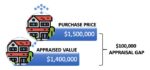
An appraisal gap is the difference between the fair market value determined by the appraiser and the amount you agreed to pay for the home.
An abnormally high number of homes across the United States are being appraised below their agreed-upon sales prices, causing some deals to implode.With home prices soaring in recent months, buyers often pay above asking price to win bidding wars. As a result, CoreLogic estimated that about 13% of appraisals came in below the contract price in August.
A home appraisal is an evaluation and report performed by a licensed appraiser to determine a home’s fair market value. Lenders require a home appraisal to ensure the amount you agreed to pay for the home is equal to or less than the appraised value. To create a home appraisal, appraisers normally rely on factors like data from recent closed and pending sales. But since sales usually close a month or two after going under contract, rapidly increasing home values can sometimes skew appraisals that rely on home values recorded months earlier.
In today’s hot market, many prospective buyers will get into bidding wars and possibly waive the appraisal contingency or offer an appraisal guarantee up to a certain amount. In both cases, the buyer would have to come up with the difference in cash between the appraisal and the sale price, or their appraisal guarantee and the sale price.
The disparity underscores the risks buyers face in the current market, especially those stretching their dollars to win a bidding war. Mortgage lenders will typically offer only enough to cover the appraised value of a home, forcing buyers to either provide the balance, renegotiate, or terminate the deal if an appraisal comes in below the contract price.
Using An Appraisal Gap Coverage Clause:
If you want your bid to outshine the others, an appraisal gap coverage clause may be necessary. An “appraisal gap clause” is used in a sales contract to guarantee that the home buyer will cover the monetary gap between the appraisal and the sales contract if an appraisal gap becomes an issue.
The clause states how much of an appraisal gap you’re willing to cover. Since there’s no guarantee an appraisal will match the agreed-upon sales price, it’s often something sellers look for to know the offer will still stand even if the appraisal comes in a little low.
The main thing that needs to be noted is the monetary value of your appraisal gap guarantee. It’s not wise to state that you will cover an unlimited amount between the sales price and the appraised value. I recommend always putting in the maximum amount that you are willing to cover.
What Should You Do When The Appraisal Is Less Than The Offer?
You have several options when the appraisal is less than the offer including walking away from the sale, but that doesn’t work in every situation.
Here’s what to consider:
Pay The Difference
If the seller won’t negotiate to lower the purchase price, you’ll be on the hook to pay the difference unless you have an appraisal contingency in your contract. The appraisal contingency gives you a way out of the contract without losing your deposit. Without it, you must buy the home or risk losing your the money you have already put down into escrow.
Without a lower sales price, you’ll have to pay more for the home. Since lenders base your loan amount on the appraised value, you’ll need your agreed-upon down payment plus the difference between the sales price and appraised value.
What if you don’t have the cash?
Ask for gift letters from family members or leverage your investments. You may be able to use some retirement funds without paying a penalty. Talk to your 401(k) administrator or tax advisor to see what options you have. If you own other real estate, consider tapping into the equity and using the funds to cover the appraisal gap.
Renegotiate The Offer     
If you have an appraisal contingency on your sales contract, you may be able to work with the seller. Start by requesting the seller to lower the price to the appraised value. This would eliminate the appraisal gap and your financial issues in buying the home.
Asking the seller to renegotiate can be risky in a seller’s market, so be careful. If the seller has a kick out clause, they could accept another offer that comes through. They still must give you the time to remove your appraisal contingency and seal the deal, but they can choose the other offer if you don’t.
Dispute The Appraisal
You can dispute the appraisal, asking for a reconsideration of value. However, this is not easy to do as you’ll need plenty of evidence to prove the appraisal is inaccurate.
You must prove one of the following:
  • The appraiser didn’t use appropriate comparable sales, and you have proof of more accurate options
  • The appraiser missed features or upgrades in the subject property
  • You found mistakes in the report
  • The appraiser only conducted a drive-by or exterior appraisal
Walk Away from the Sale
It’s not the most pleasant choice, but if you’re worried about paying more than a property is worth, sometimes walking away from the sale is the best option. If you’ve unsuccessfully renegotiated with the seller and disputed the appraisal to no avail, it may be best to look for another property.
Before you do this, talk to your attorney. If you didn’t include an appraisal contingency in your contract, you might risk your deposit. Sometimes other contingencies still help, though, especially a mortgage financing contingency.