
 Back Home
How to Declutter for the New Year!

|
||
|


|
||
|


What steps should you take now in response to the massive Equifax data breach?
The sensitive information of almost half of all Americans has been compromised, all because the company safeguarding that information reportedly failed to upgrade and update software despite being warned to do so.
To make it worse, company execs sold millions in stock after the breach, but before they told the public what had happened. The company continued to sell consumers like you pricey identity protection packages, even though they knew they were guilty of exposing that same consumer data to hackers. And it seems they suffered another hack earlier in the year but failed to notify us of the potential damage.
No wonder consumers feel helpless as they try to protect themselves from identity fraud.
Read up
The Federal Trade Commission (FTC) has put together some very helpful and comprehensive background information on the Equifax breach, chock full of consumer tips. You can read that guidance here.
Do a test
Visit the Equifax website www.equifaxsecurity2017.com to see if your personal data has been exposed.
Here’s the how-to’s from the FTC: “Click on the “Potential Impact” tab and enter your last name and the last six digits of your Social Security number. Your Social Security number is sensitive information, so make sure you’re on a secure computer and an encrypted network connection any time you enter it. The site will tell you if you’ve been affected by this breach.”
Monitor your credit
If you’re affected, sign up for the year of free credit monitoring that Equifax is offering. Even if you are not affected, you should monitor your credit to make sure no one else is taking out loans in your name. (Many big-name credit card companies offer free credit monitoring as a cardholder perk. Use it).
Once a year, you can get a free copy of your credit report from each of the three major bureaus (Experian®, Equifax®, TransUnion®) at annualcreditreport.com.
Here’s some additional advice from credit card lender Capital One: “It’s important to review all three reports—some lenders don’t report to every bureau, so they may have different information. Read through each report carefully and make sure you recognize the accounts. If something strange turns up, start by contacting the lender to investigate. For more info, take a look at this article on checking your credit report.”
Practice safe financial habits
Keep a close eye on your finances by reconciling bank accounts and credit card statements monthly, shred financial papers, change passwords often, use different passwords for different financial accounts, be careful what you click on, and practice safe computer habits.
It’s not a bad idea to enroll in purchase notification programs with your bank or credit card providers. They’ll alert you by text or email if there are large or unusual purchases in your accounts. Some even let you lock or unlock your card via mobile app. (I’ve got some funny stories to share about the purchase alerts I’ve gotten for my college age kids. Definitely TMI).
Fraud alerts and freezes
There’s been a lot of talk about fraud alerts and freezes. Putting afraud alert on your credit reports lets potential lenders know what’s going on, explains Capital One, and alerts them to take extra steps to verify your identity before issuing credit in your name.
According to Capital One, “you only need to notify one of the three credit reporting companies to put a fraud alert on your credit report and they’re required to tell the other two companies. Make sure you keep copies of all letters and renew the alert every 90 days until the issue is resolved. You can also check out the Federal Trade Commission’s website for more information.”
A credit freeze provides more protection but is time-consuming. A freeze restricts access to your credit report. Without reviewing that info, few lenders will open a new account for you. “This makes it harder for potential thieves to apply for credit or open accounts in your name,” says Capital One. However, freezing your accounts may involve service charges, takes time on the phone or online, and can get in your way the day you want to buy a new car or make some other consumer purchase using credit. To learn more about credit freezes, click here.

The Internet is full of checklists and resources to use if you are planning to move. There are packing timelines. There are lists of packing supplies. There are even directions on how to pack boxes.
But moving is much more than purging and organizing your personal affects. There are legal tasks you need to take care of too.
Here are 5 legal tasks to complete when you move:

If a flood swamps your home, will insurance cover the damage? That depends on the value of your home, the amount of water damage and whether you have a flood insurance policy.
Let’s look at some persistent myths about flood insurance.
Myth: You must live in a flood plain to get coverage.
If you live in a flood plain, your mortgage company will likely require you to buy flood insurance. But you can purchase it even if you don’t live within a flood zone. “Almost anybody can get flood insurance who wants flood insurance,” says Chris Hackett, director of personal lines for the Property Casualty Insurers Association of America. The price through the federal flood insurance program is based on standardized rates and depends on the home’s value and whether or not it’s in a flood plain.
Myth: Flood insurance covers everything.
When it comes to the physical structure of your house, federal flood insurance policies top out at $250,000. If you have a $300,000 house that’s a total loss because of a flood, the most you can recoup through the program is $250,000 to cover the structure itself. For your personal possessions, the cap is $100,000 under the federal program.
Myth: My homeowners policy covers floods.
“Unfortunately, a lot of folks may be under the impression that their standard homeowners policy might cover flood damage,” Hackett says. But the standard policy does not! The typical home insurance policy doesn’t cover earthquakes or floods. So a homeowner wanting coverage for either of those disasters will need to pick up separate, specific coverage against those types of disasters.
Myth: Water damage is water damage. When it comes to your insurance, not all water damage is the same.
If there’s a storm and your “roof comes off and water comes through, that would be covered under your homeowners policy,” Hackett says. “Versus a flood situation where the water is rising from an over flowing riverbank overflows or an unnatural amount of rain that is rising from the street.
Myth: Flood maps don’t change.
Flood plains (and flood plain maps) change and evolve. Just because you weren’t in a flood plain when you bought your home a few years ago doesn’t mean you’re not in one now.
For more information, visit FloodSmart.gov.


Do not read this list and become overwhelmed, it is an extensive list meant to cover basic home maintenance. Not all of these maintenance items will apply to all homes. This is a comprehensive guideline designed for homes in the South as well as Northern climates.
Spring cleaning is a way to demonstrate pride in ownership (or rentership). A home and its contents are investments; money spent on something you really love or really need (ideally both). When you take the time to clean thoroughly and properly, you can maintain and prolong the life of the item or finish for years. Further, it means you live in a cleaner and healthier home; less dust, dust mites, allergens, odors, and dirt.
Always start from the top and work your way down. Think about it like this: dust falls down (like rain or snow) so if you start at the top, you’ll never have to re-clean a surface (which is a time waster). It doesn’t make sense to clean the floors first and then dust the tabletops; you’ll just have to clean the floors again. Use gravity to your benefit and always work from top to bottom. It also helps you not miss anything!
General Spring Cleaning Tasks:
 These are a list of some of the things that need to be done around the house, and spring is a great time to do them. So often we don’t remember to do them, so let this be your wake-up call!
Tests and replacements:
Test smoke alarm
Test carbon monoxide alarm
Check flashlight batteries
Check fire extinguishers
Change air filters
Check all window screens for tears and repair or replace as required
Overall Spring Cleaning Chores: 
Remove fingerprints and dirt from light switches and door handles
Spring Clean Outside:

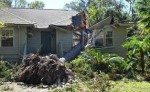
Florida, Georgia and North Carolina residents affected by Hurricane Matthew will begin surveying damages to their property and belongings.
Florida Chief Financial Officer Jeff Atwater and Insurance Commissioner David Altmaier put together the following tips to help Floridians begin the process of filing insurance claims for damaged property and belongings and this may prove useful to residents in other states as well:
Tip 1: Locate all applicable insurance policies. This may include a homeowners’ policy, flood policy (flood coverage is not covered under a typical homeowners’ policy and is separate coverage), and an automobile policy (may cover damage to your car from flooding).
Tip 2: Document all damaged property and belongings. Take photos or shoot video footage before attempting any temporary repairs. When you file an insurance claim, you may be asked for visual documentation of damages.
A photographic home inventory is a handy resource for this situation. A free smartphone app developed by the National Association of Insurance Commissioners called “MyHome Scr.APP.book” can help you take and store a room-by-room log of photos.
Tip 3: Contact your insurance company or insurance agent as soon as possible to report damages.Insurance policies require prompt reporting of claims, so it is important to act as soon as possible.
Tip 4: Cover damaged areas exposed to the elements to prevent further damage. Your insurance company may reimburse the expense of these temporary repairs, so keep all receipts.
Do not dispose of any damaged personal property until your insurance company adjuster has had an opportunity to survey it.
Florida consumers who have questions about their insurance coverage are encouraged to call CFO Atwater’s Department of Financial Services, Division of Consumer Services’ Insurance Helpline. Helpline experts can be reached by calling 1-877-MY-FL-CFO (1- 877-693-5236), or online at: myfloridacfo.com/hurricanematthew.
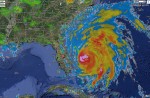
As Hurricane Matthew churns through the Atlantic with a possible landfall in Florida, the Property Casualty Insurers Association of America (PCI) urged property owners to take some basic precautions to protect themselves and their belongings.
“With the potential for Hurricane Matthew to hit somewhere along the East Coast, the Governor has issued a state of emergency for all 67 counties in Florida,” says Logan McFaddin, PCI Florida regional manager. “This caliber of a system could bring major flooding and damages along Florida’s East Coast.”
In addition to making sure residents have emergency kits and plans ready, PCI urges residents and business owners to take precautionary measures to prevent damage to vulnerable property. Flooding from storm surge during hurricanes and tropical storms can be especially dangerous for residents along the coast and further inland. PCI recommends that homeowners who sustain damage report it as early as possible to their insurance company.
McFaddin says flood insurance is advisable, but “there is typically a 30-day waiting period between the date of purchase and when flood coverage will go into effect.”
PCI hurricane precautions
Review your property insurance policy, especially the “declarations” page, and check whether your policy pays replacement costs or actual cash value for a covered loss.
Inventory household items, and photograph or videotape them for further documentation. Keep this information and insurance policies in a safe place.
Keep the name, address and claims-reporting telephone number of your insurer and agent in a safe and easily accessible place.
Protect your property by covering all windows with plywood or shutters, moving vehicles into the garage when possible, and placing grills and patio furniture indoors.
Keep all receipts for any repairs so your insurance company can reimburse you.
Check with your insurance adjuster for referrals to professional restoration, cleaning and salvage companies if additional assistance is needed.
Make sure watercraft are stored in a secure area, like a garage or covered boat dock. A typical homeowners policy will cover property damage in limited instances for small watercraft, and separate boat policies will provide broader, more extensive property and liability protection for larger, faster boat, yachts, jet skis and wave runners.
There will certainly be an extended period with power outages. After the storm, empty out your freezer and refrigerator of all perishable items and put in covered trash receptacles. Unplug all appliances and electronics since there will certainly be surges when power is restored.
Be mindful of downed power lines when going outside after the storm. Broken branches can also be dangerous and will continue to fall given the winds and rain that follow the storm. Remove debris from your property to ensure continued safety.

Always know who the real estate agent you are working with represents. If they are the Listing Agent they represent the Seller, a Transactional Agent works for their personal benefit and even though an agent will put you in the car and drive you around and are not the listing agent, in most states they are Sub-agents for the Seller and work for the seller. It is most advisable for buyers to only work with Exclusive Buyer Agents (EBAs). If you find that you are at an open house or have called an agent and they are not an EBA…you’re your tongue. What buyers may innocently say in the presence of a Seller, Listing Agent, Transactional Agent, or Seller’s Sub-agent can be used against them during a negotiation.
While it may be tempting for buyers to say what’s on their mind during their home search, you should consider yourself in a poker game and keep your cards close to your chest and your comments to yourself. There are some things home buyers should never say on the fly.
Others may be listening. Listing agents, seller and neighbors all have motives to keep tabs on the situation — or there could be even be a camera or recording device planted somewhere. In the age of smart home security you can never be too sure.
Those off-the-cuff comments made while moving from room to room could be used against you.
Here are some obvious comments home buyers should never say when shopping for a home:
‘I love it; it’s perfect!’
That feedback goes straight to the seller.
When the less-than-full-price offer comes in and the buyer requests all sorts of concessions, how will the seller be inclined to respond?
‘That (decor, furniture, wall color) is awful!’
What were they thinking?
So maybe the sellers’ tastes are not what the buyer would pick, but that doesn’t make their choices wrong. If these comments get back to the sellers, their desire to be cooperative when offer time comes in my be less than enthusiastic.
‘This home is way overpriced’
Be careful with that statement.
While this is a common buyer thought, what happens if this house ends up being the best option? When the listing agent or seller sees the buyer’s name on an offer, they immediately tart off in a defensive position. If is is truly overpriced your Exclusive Buyer Agent should provide a comprehensive analysis during the negotiation to make this point.
‘I can afford to spend up to X’
While it’s certainly a good idea for prospective buyers to find out just how much they can afford, they should keep that information strictly between them and their Exclusive Buyer Agent. You would be surprised by the number of deals that end of at the top of your affordability range because you disclosed this to the agent that is driving you around. Insist that they develop a Comparative Market Analysis and pay no more than market value for any property regardless if you can afford to pay more. Most real estate agents have a duty to get the highest price offer for the Seller or want to get the highest price offer to get the most commission. The only type of agent that has a fiduciary responsibility to the Buyer is an Exclusive Buyer Agent, even an Accredited Buyer Agent will either be a transactional agent or sub-agent of the Seller if they are not the listing agent as well.
“Why is the Seller moving?”
This is a personal question that’s best not asked by a buyer, it will more often then not result in an evasive answer or a lie.
Let the buyer’s agent position that query with the listing agent in a diplomatic way to glean information about the situation at hand.
‘What are the neighbors like?’
Talk about putting someone on the spot. Listing agents likely have no idea — they don’t live in the neighborhood 24/7, and it would they cannot discuss race, religion, sexual orientation, etc. When cornered, is the seller likely to divulge?
“There’s a Mrs. Kravitz across the street and a curmudgeon next door? And by the way, the teenager that lives on the other side of the house? His band starts warming up in the garage about 11 p.m. on Thursday nights.”Hardly. These people are trying to sell their house. It’s all wonderful. Buyers have to assess the neighbors on their own. Visit the neighborhood and different times of the day and on the weekends to get a sense of the neighborhood.
‘Will the seller take X price?’
Negotiations are best left to agents with a written document from which to work. No Agent or Seller will be inclined to negotiate in good faith without a written offer and Proof of Funds or a pre-qualification letter that demonstrates your ability to buy the property.
Although it’s OK to be candid with your own agent and those you trust, only do so when you are not within earshot of anyone in the seller’s camp. That includes those curbside chats as you are wrapping up the showing near your car.
Be engaged but conservative in the information you share and how you react to homes you see, even if you have a real interest. You can jump for joy when you are with your agent writing the perfect offer.
 Kim N. Bregman
All information is provided by the licensed REALTOR®/Broker/Agent. This information is not verified for authenticity or accuracy and is not guaranteed. This website is not responsible or liable in any manner for any content posted herein or in connection with our services. Information is not guaranteed and must be confirmed by the end user.
Copyright © 2026 OPTIMA PROPERTIES. All Rights Reserved. | | Sitemap | Real Estate Website Design & Internet Marketing by Agent Image