
Slide 1

Serving South Florida

Slide 2
For over 40 years

Mortgage Information

TRID: What it means for you as a Homebuyer

On November 13, 2013, the Consumer Financial Protection Bureau issued a rule regarding changes to current early disclosure and closing documentation used on mortgage loan transactions. Anyone in the real estate or mortgage industry should understand that new regulations called TRID (TILA/RESPA Integrated Disclosures) and how they will have an impact on the timing and notifications required throughout the closing process.

But what does TRID mean for you as a homebuyer? If you have previously bought or sold a home, you’ll see two main changes: forms and closing deadlines.

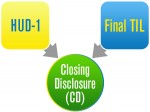
Forms. The Truth-in-Lending Statement and Good Faith Estimate will be replaced by a new Loan Estimate. The Final Truth-in-Lending Statement and HUD-1 documents will be replaced by the Closing Disclosure.

These forms have been changed to provide the buyer with a clearer picture of the costs involved with mortgage financing, and to give the buyer more time to review and accept these terms. These changes originate from the CFPB (Consumer Financial Protection Bureau) as part of the Dodd-Frank Act. The standard real estate contacts are changing as well to reflect the dates and timing of obtaining a loan.

What is most important is the impact on the time it may take to schedule a closing under these new rules. Buyers must receive and acknowledge their Closing Disclosure at least 3 business days prior to the closing. This will require more coordination and communication between agents, closing attorneys and lenders to ensure this takes place. It is very important to make sure you are working with an informed team of agents, closing attorneys and lenders in order for the process to go as smoothly as possible.

Keep these three primary areas in mind while preparing yourself for the home buying process if you are planning on getting a mortgage:

  1. The old forms are out.


The homebuyer will be receiving new disclosure forms from lenders explaining the loan estimate and loan closing. The Loan Estimate form combines the Good Faith Estimate (GFE) and the Truth in Lending Disclosure into a shorter form that should be easier to understand and explains the mortgage loan’s key features, costs and risks at the beginning of the mortgage process.

Under TRID, a lender cannot impose any fee, except a reasonable fee for obtaining a consumer’s credit report, on a consumer until the consumer has received the loan estimate and has indicated intent to proceed. This should make it easier for a consumer to shop for and understand interest rates, but it might take lenders longer to preapprove someone because they are going to be extra careful when collecting and reviewing borrower information.

The Closing Disclosure form combines the final Truth-In-Lending statement and the HUD-1 settlement statement into a shorter form that should be easier for the consumer to understand and provides a detailed account of the entire real estate transaction, including terms of the loan, fees and closing costs.

This disclosure might transform the closing table from a nightmare experience with piles of documents to review for the first time into a more manageable, slightly bad dream of reviewing the information ahead of time.

With more information provided by the lender before the closing date, the various roles held by the lender and title company at the closing table might change. Stay tuned.

2. The disclosures must be provided within a specific time frame — or else.

 Lenders must provide the Loan Estimate form to consumers within three business days of applying for a loan – which means three business days after the consumer provided the lender with their name, income, Social Security number, property address, property value estimate and mortgage loan amount sought.

The Closing Disclosure form must be provided at least three business days before loan consummation (the time the consumer becomes contractually obligated to the mortgage, which is usually at closing).

Any significant changes to the loan terms (the annual percentage rate (APR) becomes inaccurate, the loan product changes or a prepayment penalty is added) will restart a new three-business-day waiting period. Both the Loan Estimate and Closing Disclosure forms can be delivered in person, by mail or electronic delivery.

3. The closing process will be impacted this in the months to come.

 The TRID rules apply only to loan applications received after Oct. 3. Lenders will be extra careful and hesitant after this date, while providing mortgages so as not to be out of compliance with the new rules. This will most likely translate to longer timelines to get a mortgage and will delay closing dates.

This, in turn, will impact the tight timelines around moving into a home while consumers are also coordinating assets, move-in dates, time off of work and so on.

Plan for extra time to close while everyone tests out the new system and becomes familiar with new regulations and how to work together and train staff. If you are a Buyer, look for agents, attorneys and lenders that are using electronic disclosures and e-signatures. This will dramatically shorten the loan process by almost two weeks as compared with those that are relying on the US Mail.

Many common real estate practices that you have experienced in the past will be more difficult or even impossible after October 3. Critical issues like dates per the sale agreement and how changes to the deal will impact timing may cause delays because of the three-day rule and the requirement that lenders now prepare the CD. The need for Title companies and real estate agents to submit information much earlier in the process will definitely add more hurdles to jump over to close a transaction.

In my opinion, CASH transactions, will carry a much higher level of negotiation leverage for the next several months until this process becomes the norm.


2015 – The Year of the Boomerang Buyer

This year is already shaping up to be the year of the boomerang buyer, or the repeat homebuyer.  As it is now seven years since the housing crash, there are many buyers who experienced a financial hardship in the recent past who are getting back into the market to purchase a home again in 2015.

There were several changes recently to the waiting periods when a buyer or homeowner can obtain a new mortgage and repurchase a home again after a foreclosure, short sale or bankruptcy.  Borrowers today essentially have three options when it comes to obtaining financing to purchase a home. In fact, more than 9 out of 10 mortgages are either funded by Fannie Mae/Freddie Mac, the FHA or VA. So, if you are looking to purchase and need financing, it is more than likely you will be using one of these three financing options and it is important to know the current waiting periods when you can repurchase after a hardship.

After Foreclosure:

  • Conventional: Seven years. If you included the foreclosure in a bankruptcy, you can qualify after four years instead of seven years.
  • FHA: Three years. FHA buyers can qualify again after just one year if they experienced an economic event.
  • VA: Two years.

After Short Sale:

  • Conventional: Four years.
  • FHA: Three years. If the FHA buyer did not have any late payments before their short sale, they are allowed to automatically qualify again for FHA financing. There’s also a fantastic FHA program called the FHA Back to Work Program. If a buyer experienced an “economic event” whereby their household income fell by 20 percent or more for a period of at least six to 12 months, the agency has now reduced the waiting period to only one year.
  • VA: Two years.

After Bankruptcy:

  • Conventional: Chapter 7, four years; Chapter 13, two years.
  • FHA: Chapter 7, one year; Chapter 13, one year.
  • VA: Chapter 7, two years; Chapter 13, one year.

What if you don’t fit into these rules?

There are new mortgage options available for borrowers who do not fit these more traditional mortgage options above. Portfolio lenders are stepping in to provide mortgage options for buyers who cannot qualify for conventional, FHA and VA financing, and with terms much better than private financing.

There are lenders who will provide financing for buyers less than six months out of a foreclosure, short sale or bankruptcy. Of course, this does not come without a price. You need a larger down payment and rates will be higher than traditional loans.

Another part of the puzzle to helping you get in a position to repurchase again is ensuring you have also started to re-establish your credit since the financial hardship.

For example, even though the required timeline of say two or three years may have passed so you can qualify for conventional or FHA financing again, it is important you have also started to rebuild your credit and have the required credit scores to qualify again for financing. The FHA and VA only require a 580 credit score to repurchase again.

The first step is to get a copy of your credit report to verify if the financial hardship or discharge is reporting correctly and to also see what your scores are.

You can go to www.annualcreditreport.com to get a free copy of your credit report (consumers are allowed one free credit report per year).

Then the next step is to start rebuilding your credit scores.


Adjustable Rate Mortgages: The Pros and Cons


Adjustable rate mortgages are loans with variable interest rates that change according to the market rates, as opposed to fixed rate mortgages, which guarantee a set rate for the entire period of the loan. ARMs may seem like a great idea some years, but in other years, you may wonder what you were thinking when you agreed to the loan.

Many financial experts advise home buyers to seek fixed rate mortgages. The set interest amount makes it easier to calculate monthly payments with no surprises. An adjustable rate mortgage can leave you with unpleasant surprises if the interest rates suddenly soar.

There are some pluses as well as minuses to adjustable rate mortgages. As with any financial decision, learn all you can about the topic and weigh the pros and cons carefully before choosing a loan type.

On the Plus Side…

ARMs may be good for buyers who plan to sell in a few years. If you know your job requires you to move every five years, an ARM may be worth the risk of interest rates rising, depending on the current rate.
Paying off your loan in a short time period may make an ARM better for some homeowners. For those who know they can repay the entire mortgage amount quickly but just need a short-term loan, ARMs may actually save them money.
Some ARMs offer a combination of adjustable and fixed rates. These may offer the best of both worlds, depending on market rates. For example, a mortgage may be fixed for five years, and then adjust annually.
On the Minus Side …

Interest rates may be low now, but that only means they’ll rise later. When interest rates rise, your interest rate rises too. Your monthly payments will increase. This may be a hardship for some people.
Adjustable rate mortgages may be saddled with a prepayment penalty. This means that if you suddenly come into a windfall and wish to pay your entire mortgage loan, you may actually be penalized for paying it off early.
ARMs can be difficult to understand. There are many variables, and you have to carefully read all the fine print to understand the nuances of a particular ARM. Fixed rate mortgages are a lot easier to understand: borrow this, pay that; it never changes.
Adjustable rate mortgages come in and out of fashion, but the truth is that you shouldn’t take out such a loan unless you understand the worst-case scenario and how it may impact your financial health. While they are not for everyone,

ARMs do offer some advantages, and those who can take advantage of these opportunities may find them useful. Talk to your lender about all the ramifications of an adjustable rate mortgage compared with a fixed rate mortgage.


5 year Fixed Mortgage – A New Trend?

5 year fixed mortgage could be a new solution to those who want to avoid long-term loans. As traditional lenders advertise 30, 15, or 10-year mortgages, the new idea has been emerging in the credit union industry – it is a 5 year fixed mortgage. While banks and mortgage companies are limited by the laws and government regulations, credit unions are less tied up by these limitations and thus less restrictive.

5 year fixed mortgage would definitely have higher payments due to the shorter duration of the loan but it will ultimately help the homeowners to become debt-free in a very short period of time. It is something people nearing retirement might consider as well as the empty-nesters and those younger buyers who do not want to carry the burden of the loan for a long period of time. Not only will the buyers become debt-free in a short period of time, they will also pay only a fraction of the interest that accumulates on traditional 30 or 15-year loans.

Here is an example of total cost of the loan based on its duration in years: $150,000 mortgage at five percent would cost you a total of $289,883 in principal and interest on a 30-year-loan to pay it off, which comes pretty close to double the amount of the original cost of your home. When paid over 15 years, the total cost would amount to $213,514. If you paid it off in five years, the total cost would be $169,841. As you can see, it is only a little bit more than the original loan amount. The difference of course becomes bigger and bigger as the loan amount increases.

Additional advantage of the 5 year fixed mortgage is that, in general, the lower the term, in years, the lower the interest rate is which adds up to the total savings. It is also a great option for anyone who can afford to make the higher monthly payments. Refinancing to a shorter term is a great option for someone who’s been in a house a few years already or for people who have higher interest rates. It is also a great option for those who are conservative investor and would rather pay off their home mortgage and use the extra cash toward other investments. You should, however, take into account your current financial situation, and if, or how, the higher payment might affect your lifestyle.

It might not, however, be the best option for those who struggling financially or who have multitude of other financial obligations. There is an argument that you might be better off with a longer term loan because it will free up more money every month for other investments. If you can find a better investment that would give you a good rate of return it could be a viable option. There are, however, few investments that would either offer a good rate of return or come with any guarantees. Lower mortgage interest rate that comes with a shorter mortgage term is a sure thing, at least for the time being, so a 5 year fixed mortgage could be a thing to consider.


3 Ways To Deduct Mortgage Interest

Your home is more than an investment and a place to live-it also can be a valuable source of tax deductions. For many homeowners, one of the biggest itemized deductions on Form 1040

is the one for qualified residence interest (commonly called the “mortgage interest deduction”). In the usual situation, you can write off all, or almost all, of the mortgage interest you’ve paid for the year.

Under current law, you may claim deductions for three basic types of mortgage interest, up to certain limits:


Acquisition Debt: This involves mortgage proceeds you use to buy, build, or substantially renovate a home. The loan must be secured by a qualified residence (either your principal residence or a second home such as a vacation home). Interest on such debt is deductible on amounts of up to $1 million. Acquisition debt often amounts to the lion’s share of your mortgage interest deduction.

Home Equity Debt: If it’s allowed by the laws of your state, you also may deduct the interest on home equity loans secured by a qualified residence, regardless of how you use the proceeds. But with home equity debt, deductions are limited to interest paid on loans of up to $100,000. In addition, the loan amount can‘t exceed your equity in the home.


Points:  Although points really aren’t mortgage interest, the tax law essentially treats them as if they were. These are the charges a lender may impose when you obtain a mortgage. (One point equals 1% of the amount you borrow.) You can deduct any points you paid for acquisition debt, but you’ll need to deduct charges for refinancing over the term of the loan. For instance, if you refinance a $200,000 mortgage with a 10-year loan and pay two points – or $4,000 – you may deduct $400 in points ($4,000 divided by 10) annually for 10 years.

You can claim the deduction only if you’re an owner of the home and pay the interest. Please consult with you accountant regarding special rules that may apply to your specific situation and state laws.

How to Get Pre-Approved for a Mortgage


If you are hoping to become a homeowner, it is highly likely that you’ll need a mortgage. Before house-hunting ever begins, it is good to know just how much you can afford to borrow. All prospective homeowners must go through the process of getting pre-approved to see if they qualify for the loan and to determine how much you can afford to invest in a new home. New buyers can be understandably overwhelmed by mortgages in general, but knowing how to go about getting a mortgage before diving in is a good first step. Getting pre-approved is not as daunting a task as you might think.

Understanding your finances and the total cost of owning a home is key to determining your home budget. When figuring out what kind of mortgage payment one can afford, other factors such as taxes maintenance, insurance, and other expenses should be factored. Usually, lenders want borrowers having monthly payments exceeding more than 28% to 44% of the borrower’s monthly income. For those who have excellent credit, the lender may allow the payments to exceed 44%. There are many websites available to assist you in determining what the mortgage payment would be based on the amount borrowed and the interest rate. If you adjust the loan amounts and hit the search button, the monthly payment numbers will automatically update. Another factor in determining how much you can borrow is a direct function of how much cash you have to put down on the property.

Have you heard the terms “pre-qualified” or “pre-approved?” It’s important to know the difference. With a pre-qualification, the borrower and lender have discussed income, assets, and credit, but it is not formally verified. A pre-approval, however, is a formal review of the same things as a pre-qualification, as well as a review of the borrower’s full credit report. Having the pre-approval documentation is better because it is a true representation of the mortgage loan you are eligible for and is often required when submitting an offer on a home.

Through the credit report, lenders acquire the borrower’s credit score, also called the FICO score and this information can be acquired from the major credit bureaus TransUnion, Experian, and Equifax. The FICO score represents the statistical summary of data contained within the credit report. It includes bill payment history and the number of outstanding debts in comparison to the borrower’s income.

The higher the borrower’s credit score, the easier it is to obtain a loan or to pre-qualify for a mortgage. If the borrower routinely pays bills late, then a lower credit score is expected. A lower score may persuade the lender to reject the application, require a large down payment, or assess a high interest rate in order to reduce the risk they are taking on the borrower.

Many people have issues on their credit report, which they are unaware of. The first step in determining if you have any outstanding issues is to get a copy of your credit report. AnnualCreditReport.com allows you to see your credit reports from Experian, Equifax & TransUnion for free.

Next, it’s time for the paperwork. Gather and keep every piece of financial paper in the two months leading up to buying a house. That means pay stubs, bank statements for savings, checking and investment accounts, W-2s, tax returns for the previous two years, canceled rent checks and any mortgage or property tax statements for other property you own. Put these in PDF format to make it easier to send to your mortgage broker or bank.

In the months leading up to your home purchase, keep your hands off your finances. That includes moving money from a savings account into a certificate of deposit, or CD. It also means no cashing in investments from stocks, retirement accounts or CDs. Otherwise, you will create a huge headache for yourself as you try to show the bank the paper trail of where that money came from. In a similar vein, avoid paying off debts with savings because that could cause your lender to worry about how you will pay for closing costs.

Once you’re ready to start the pre-approval process, you’ll need to fill out the mortgage pre-approval application itself. Make sure you complete it as accurately as possible. The standard application asks for personal information such as financial account numbers and the desired borrowing amount, which is also called the target loan amount. It might seem unnerving to disclose your personal finance information and work history, but this is standard information that lenders use to assure you are financially responsible enough to undertake such a large loan. Working with a lender you trust will make sharing this information more comfortable. After you’ve completed and signed the forms, your lender will need to review and sign them and begin the loan approval process.

Once you get the Preapproval that means the lender will actually loan the money on a property based on your current financial situation after an appraisal of the property and a purchase contract and title report has been drawn up.

After you’ve finished your application and it is approved, you can begin to look for a home. Most mortgage pre-approvals are open for 60-90 days and after this time it expires. If your search extends beyond that, simply resubmit your application to refresh this term if you haven’t started the purchase process yet. Although getting a mortgage can sound like a lot of work, understanding what to do before starting your home search will only help ease the stress. The mortgage pre-approval may very well be the most important aspect of looking to purchase a home, as it helps define your price range. There are a few steps to the mortgage pre-approval process, so shopping around and working with a helpful lender you trust will only make the process easier and more productive for you.