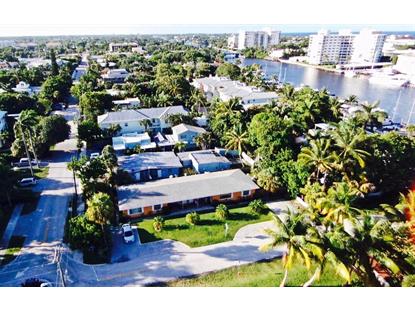


What Buyers Should Check When Buying an Older Home

Serving South Florida
Filed under: Blog, Exclusive Buyer Agent, First Time Homebuyers, Florida Real Estate, Home Buyer Advice, Home Buyers, Homebuyer Advice, Real Estate, Real Estate Investment, real estate news, Real estate trends, South Florida Real Estate, What Buyers Should Check When Buying an Older Home by Kim Bregman
Comments Off on What Buyers Should Check When Buying an Older Home
Any responsible buyer wants to know everything about the home they’re buying before signing on the dotted line. After all, this is probably the biggest purchase you will ever make, so due diligence is a must. The majority of the real estate agents in Florida are Transactional Agents and do not owe the Buyer a fiduciary duty, An Exclusive Buyer Agent does and will work for the buyer to determine all the information known about the property and advise you on inspections, permit searches, etc. Reviewing the Seller’s Disclosure is the first step in this process.
A Seller’s Disclosure in the State of Florida Is a standard form that is essentially a checklist in which a seller indicates the condition of the different features of a property, any known problems affecting the property, and any pending legal issues. This could include things like knowledge of lead-based paint, water damage, pest damage, past repairs, past insurance claims, any history of property line disputes, etc.
Typically, a seller’s disclosure form is filled out by the seller along with their listing paperwork. When buyer’s agents go into the Multiple Listing Service (MLS) to look up potential properties for their clients, that disclosure statement should be available or can be requested from the listing agent.
I am increasingly running into situations wheretransactional brokerage firms are taking the position that since a Seller’s Disclosure is NOT required by law that are not asking the sellers of their listings to fill one out. The first line of the SPDR provides “Notice to Licensee and Seller”; the less they know, the easier it is to make a “deal”. They are relying on the fact that other transactional agents working with buyers will feel the same and not ask for a Sellers Disclosure.
Although sellers aren’t required to complete this specific SPDR form, a residential seller does have to comply with the rule established in Johnson v. Davis. In that case, the Florida Supreme Court held that “where the seller of a home knows of facts materially affecting the value of the property which are not readily observable and are not known to the buyer, the seller is under a duty to disclose them to the buyer.” These material facts are sometimes referred to as latent defects. In addition, in Rayner vs. Wise Realty Co. of Tallahassee, the First District Court of Appeal provided that this same disclosure requirement applies to residential properties that are being sold as is.
In cases were the listing agent does not provide a Sellers Disclosure I request that the Seller answer all my questions in writing and provide a comprehensive list of questions that encompasses everything asked on the SPDR and more.
A seller’s disclosure form is NOT a substitute for a home inspection. Remember, sellers are required to disclosure only problems they know about. Most homeowners don’t go in their attic very often, and have probably never been up on their roof, and they aren’t required to do so before filling out the disclosure. While this document can provide a lot of valuable information, the home inspection is another layer of protection for a buyer.
The importance of this disclosure statement is just one of the many reasons why it’s critical for buyers and sellers to use an Exclusive Buyer Agent ( EBA) during any real estate transaction. EBAs are up-to-date on the latest laws and regulations and are very experienced with the complex documents and paperwork. They can help walk buyers through the disclosure so they understand all aspects of the home they’re buying and recommend the appropriate home inspections ( WDO, Radon, Leak Testing, Mold, and more) to ensure that any hidden defects are found in advance of the purchase.
Filed under: Blog, contracts, Exclusive Buyer Agent, First Time Homebuyers, Florida Real Estate, Home Buyer Advice, Home Buyers, home Inspections, Homebuyer Advice, House Closings, Real Estate, Real Estate Closings, Real Estate Investment, real estate news, Real estate trends, South Florida Real Estate, Uncategorized by Kim Bregman
Comments Off on What Home Buyers Can Learn From a Seller’s Disclosure Statement
Filed under: Blog, Exclusive Buyer Agent, First Time Homebuyers, Florida Real Estate, Home Buyer Advice, Home Buyers, Home Financing, Homebuyer Advice, Mortgage Information, Real Estate, Real Estate Investment, real estate news, Real estate trends, South Florida Real Estate, Tax deductions by Kim Bregman
Comments Off on Key Trends Home Buyers Should Watch in 2019
|
|
|
World events are conspiring to make it more expensive for you to borrow money to buy a house.
Mortgage rates have increased for six consecutive weeks, according to Bankrate data, bringing interest on a 30-year fixed rate loan to 4.44 percent—the highest level in 11 months—while home prices continue to rise due to a lack of available homes.
After years of tepid economic growth, inflation and wage growth recently found a groove, while the Federal Reserve’s plan to raise short-term interest rates multiple times for a consecutive year has reduced the value of government debt.
Homebuyers Should Get off the Fence
Mortgage rates are moved by the yield on 10-year Treasuries, rather than short-term rate hikes by the Fed. That’s why mortgage rates fell throughout 2017, for instance, even as the central bank raised the federal funds rate three times. Rates remain cheap, however, compared to historical prices. A 30-year fixed-rate mortgage came with an interest rate above 6 percent just before the Great Recession in 2007. Potential homeowners should get off the fence and make a bid, assuming you have an affordable home target and adequate savings, because rates are likely only heading north.
Mortgage rates are expected to climb in 2018, so it might be worth shopping for a mortgage before this long period of low rates takes a turn.
Here are several predictions from the largest housing and mortgage groups for the 30-year fixed-rate mortgage:
|
Filed under: Blog, Exclusive Buyer Agent, First Time Homebuyers, Florida Real Estate, Home Buyers, Home Financing, Homebuyer Advice, House Closings, International Home Buyers, International investors, Mortgage Information, Mortgage Interest Deductions, Real Estate, Real Estate Closings, Real Estate Investment, real estate news, Real estate trends, South Florida Real Estate by Kim Bregman
Comments Off on Why Your Mortgage Is Getting More Expensive
The Commerce Department reported that January Housing Starts jumped 9.7 percent from December to an annual rate of 1.326 million units. This was the highest level since October 2016 and up 7.3 percent from January 2017. Single-family starts, which account for the largest share of the market, rose 3.7 percent from December while multi-dwelling starts with five or more units surged 19.7 percent. Housing Starts rose in the Northeast, South and West but declined in the Midwest.
Building Permits, a sign of future construction, rose 7.4 percent from December to an annual rate of 1.396 million units. With many buyers facing inventory shortages across much of the country, this strong report regarding new home construction is a welcome sign!
The National Association of REALTORS® reported that January Existing Home Sales declined 3.2 percent from December to an annual rate of 5.38 million units. Sales were down 4.8 percent from a year ago, the largest decline since August 2014. Low inventories of homes for sale were indeed a thorn in the side of would-be buyers with just a 3.4-month supply available at the current sales pace. A 6-month supply is considered healthy.
Retail Sales also disappointed in January, as the Commerce Department reported a 0.3 percent decrease. December’s reading was also revised downward to 0 percent from a 0.4 percent increase. The key highlight was that consumer spending wasn’t strong in recent months, and this could impact GDP expectations.
Consumer inflation edged higher in January, with an important component jumping to a 12-month high! The Consumer Price Index (CPI) rose 0.5 percent in January, just above expectations due to higher gasoline prices, the Labor Department reported. Core CPI, which strips out volatile food and energy prices, rose 0.3 percent from December. This was the largest increase in a year, boosted by rising rents.
Inflation reduces the value of fixed investments like Mortgage Bonds. This means signs of inflation can hurt Mortgage Bonds and impact the home loan rates tied to them, which is a trend we’ve seen through much of this year. Stocks have also reacted negatively to hints that inflation was on the rise because inflation brings higher rates and higher rates hurt corporate borrowing. Stocks even entered correction territory in early February, meaning a 10 percent decline from recent highs.
Filed under: Blog, Exclusive Buyer Agent, First Time Homebuyers, Florida Real Estate, Home Buyer Advice, Home Buyers, Homebuyer Advice, House Closings, International Home Buyers, Real Estate, Real Estate Closings, Real Estate Investment, real estate news, Real estate trends, South Florida Real Estate by Kim Bregman
Comments Off on Housing Starts Heating Up!
After Hurricane Irma, much of Florida lost power. And during Hurricane Maria, all of Puerto Rico is in the dark.
The one-two punch of storms reminded Floridians of the importance of owning a generator. If you’re shopping for a power source, here are factors to consider:
How much do you want to spend?
Stand-by generators can power your whole house and usually run on natural gas or propane. They typically cost $5,000 to $10,000, according to Consumer Reports. And you’ll need to start planning the installation months in advance. Most homeowners opt for portable generators, which usually won’t run central AC and cost $400 to $1,000. (However, Consumer Reports’ top-rated portable generator is a Honda that goes for $3,999.)
What do you want to power?
If you want to run a fridge, a fan and a few lights, a small portable generator will do the job. If you hope to keep living as if the hurricane never hit, you’ll need a stationary generator. And if you’re willing to rough it but would like to run a window AC unit, you’ll want to make sure before the storm that your generator has enough juice to run your AC. Another caveat: Cheap generators can produce power surges that will fry expensive electronics.
How much noise can you stand?
Or, put another way, how many decibels do you want to bombard your neighbors with? In general, the more expensive the generator, the quieter it is.
Technology is getting better.
For decades, Floridians have been buying portable generators that were the mechanical equivalent of muscle cars, says Paul Hope of Consumer Reports. Now, though, manufacturers are designing fuel-injected engines for generators. These models are quieter, more fuel-efficient and emit less carbon monoxide. They’re also more expensive.
The smart move, says Hope, is to shop for a generator between storms or after hurricane season. That gives you time to research what you need — and to hire an electrician to install a transfer switch or interlock device that lets the generator power your house.
Filed under: Exclusive Buyer Agent, First Time Homebuyers, Florida Real Estate, Home Buyer Advice, Home Buyers, Home Maintenance, Homebuyer Advice, Insurance Claims, Real Estate, Real Estate Closings, Real Estate Investment, real estate news, Real estate trends, Relocation, South Florida Real Estate by Kim Bregman
Comments Off on Buying a generator: Tips to know before you make a purchase
Before you let that dream home slip away, consider these strategies to help bridge the transition:
Make an offer that’s contingent on the sale of your house:
A seller may be persuaded to accept your offer with the caveat that you’ll have to sell your house before closing on theirs. You’ll strengthen your chances of getting a seller to take a chance on you if you can show that your home is priced properly and has a solid marketing strategy. Successful contingency offers depend on good communication between the real estate agents representing both sides. It’s up to you and your agent to reassure the seller that the closing won’t be delayed. Obviously, in hotter housing markets with potentially multiple bids, it can be harder to get sellers to accept such an offer.
Offer the seller a rent-back option:
One way to buy yourself extra time to complete your sale is to offer to buy the new house, then rent it back to the seller after closing. A rent-back agreement is typically for just a month or two. But this arrangement can give sellers extra time to move – or to find a new house of their own – while putting a little money in your pocket and keeping you from having to pay two mortgages at once.
Tap the equity in your current home:
If you have a high credit score and considerable equity in your house, you could free up some of the latter with a home equity line of credit. A HELOC lets you use up to 85 percent of your home’s value, less the balance remaining on your mortgage, and is fine-tuned based on your credit profile and income. Most HELOCs have a variable interest rate, so it’s in your best interest to pay off the loan as soon as your current home sells.
This strategy may let you buy a house before you sell, but it’s not a last-minute option. A HELOC requires an appraisal, income verification and a thorough credit check, so it takes time – generally 30 days or more – to qualify, says Tim Beyers, mortgage analyst with American Financing in Aurora, Colorado. If you’re thinking of going this route, make sure you run the numbers with an expert upfront, Beyers says.
To qualify for the new loan, a lender will evaluate your current mortgage payment, plus the HELOC payment and your new monthly mortgage payment, to calculate your debt-to-income ratio for the new mortgage approval, Beyers says. If your income is high enough to have a debt-to-income ratio below 40 percent with all those payments and other monthly expenses taken into account, only then should you consider a HELOC, he adds.
“Once you start dipping into your home’s equity, that changes the equation when you apply for a new mortgage,” he explains. “Taking too much out can hurt your qualification chances on a new mortgage. Don’t make an offer, then try to scramble to do the math.”
Add a HELOC to your new mortgage:
With this strategy, you break up the financing on your new home with a first mortgage for the amount you need, plus a HELOC to make up the difference in your shortfall for a downpayment, says Elise D. Leve, senior mortgage banker at Citizens Bank in New York.
Once you sell your current home, you can pay the HELOC portion off in full and end up with the single mortgage you wanted in the first place, Leve says.
Get a Bridge Loan:
A much riskier strategy is what’s called a ‘bridge’ or ‘swing’ loan. Using your existing home as collateral, you take out a bridge loan for three months to five years to use as the down payment on your new home. Once you’ve purchased your new home, you sell the old one and pay off the mortgage and the bridge loan. Such a loan is less risky in a fast appreciating market where appreciation can cover the extra payment on the old home. Even in the best market, however, swing loans can be expensive, last-ditch propositions that are fraught with caveats. Bridge loans can cost 5 to 10 percentage points more than a typical equity loan. Your home must be lien free. Excellent credit is mandatory, as are good income-to-debt ratios. It may be a better idea to get a cash-out refinance, second mortgage or equity loan to use as a bridge loan. Traditional financing is cheaper and less risky, but that could preclude you from landing another mortgage for a new home should the lender consider you stretched too thin.
Filed under: Blog, Exclusive Buyer Agent, Florida Real Estate, Home Buyer Advice, Home Buyers, Home Financing, Homebuyer Advice, Mortgage Information, Real Estate, Real Estate Closings, Real Estate Investment, real estate news, Real estate trends, Relocation, Retirement, South Florida Real Estate, western north carolina real estate by Kim Bregman
Comments Off on How To Buy A Second Home?
Flipping is when real estate investors buy real estate and then resells them at a profit months down the road. Can you make money doing this? Yes.
Can you make a lot of money doing this? Yes.
But you can also lose everything you own if you make a bad decision….Absolutely!
A renovation can be an overwhelming experience with high stakes. Investors must create an overall vision for the project, gauge its financial feasibility, build a reliable team that includes a Realtor, contractors, lender, accountant, insurance agent, designer or architect, and attorney or Title Company, be highly capitalized, and hope that their assessment of the market is accurate and that the property sells quickly. The longer your cash is tied up and you are paying expenses the less profitable your investment.
Thanks to tighter lending standards you will need plenty of cash, and nerves of steel, to get into flipping. So what do you need to get started?
What Makes a Good Real Estate Investment?
Finding an undervalued property in this market can be a challenge. With foreclosure rates down and bank owned property inventory drying up, there is a shortage of inventory compared to just a year ago. Utilizing real estate professionals will greatly assist you in finding suitable properties.
Now Get Working
Relist and Sell
Final Word
Filed under: Blog, Exclusive Buyer Agent, First Time Homebuyers, Florida Real Estate, Home Buyer Advice, Home Buyers, Home Financing, Homebuyer Advice, House Closings, Real Estate, Real Estate Closings, Real Estate Investment, real estate news, Real estate trends, South Florida Real Estate, western north carolina real estate by Kim Bregman
Comments Off on Tips for Investors New to Flipping
Always know who the real estate agent you are working with represents. If they are the Listing Agent they represent the Seller, a Transactional Agent works for their personal benefit and even though an agent will put you in the car and drive you around and are not the listing agent, in most states they are Sub-agents for the Seller and work for the seller. It is most advisable for buyers to only work with Exclusive Buyer Agents (EBAs). If you find that you are at an open house or have called an agent and they are not an EBA…you’re your tongue. What buyers may innocently say in the presence of a Seller, Listing Agent, Transactional Agent, or Seller’s Sub-agent can be used against them during a negotiation.
While it may be tempting for buyers to say what’s on their mind during their home search, you should consider yourself in a poker game and keep your cards close to your chest and your comments to yourself. There are some things home buyers should never say on the fly.
Others may be listening. Listing agents, seller and neighbors all have motives to keep tabs on the situation — or there could be even be a camera or recording device planted somewhere. In the age of smart home security you can never be too sure.
Those off-the-cuff comments made while moving from room to room could be used against you.
Here are some obvious comments home buyers should never say when shopping for a home:
‘I love it; it’s perfect!’
That feedback goes straight to the seller.
When the less-than-full-price offer comes in and the buyer requests all sorts of concessions, how will the seller be inclined to respond?
‘That (decor, furniture, wall color) is awful!’
What were they thinking?
So maybe the sellers’ tastes are not what the buyer would pick, but that doesn’t make their choices wrong. If these comments get back to the sellers, their desire to be cooperative when offer time comes in my be less than enthusiastic.
‘This home is way overpriced’
Be careful with that statement.
While this is a common buyer thought, what happens if this house ends up being the best option? When the listing agent or seller sees the buyer’s name on an offer, they immediately tart off in a defensive position. If is is truly overpriced your Exclusive Buyer Agent should provide a comprehensive analysis during the negotiation to make this point.
‘I can afford to spend up to X’
While it’s certainly a good idea for prospective buyers to find out just how much they can afford, they should keep that information strictly between them and their Exclusive Buyer Agent. You would be surprised by the number of deals that end of at the top of your affordability range because you disclosed this to the agent that is driving you around. Insist that they develop a Comparative Market Analysis and pay no more than market value for any property regardless if you can afford to pay more. Most real estate agents have a duty to get the highest price offer for the Seller or want to get the highest price offer to get the most commission. The only type of agent that has a fiduciary responsibility to the Buyer is an Exclusive Buyer Agent, even an Accredited Buyer Agent will either be a transactional agent or sub-agent of the Seller if they are not the listing agent as well.
“Why is the Seller moving?”
This is a personal question that’s best not asked by a buyer, it will more often then not result in an evasive answer or a lie.
Let the buyer’s agent position that query with the listing agent in a diplomatic way to glean information about the situation at hand.
‘What are the neighbors like?’
Talk about putting someone on the spot. Listing agents likely have no idea — they don’t live in the neighborhood 24/7, and it would they cannot discuss race, religion, sexual orientation, etc. When cornered, is the seller likely to divulge?
“There’s a Mrs. Kravitz across the street and a curmudgeon next door? And by the way, the teenager that lives on the other side of the house? His band starts warming up in the garage about 11 p.m. on Thursday nights.”Hardly. These people are trying to sell their house. It’s all wonderful. Buyers have to assess the neighbors on their own. Visit the neighborhood and different times of the day and on the weekends to get a sense of the neighborhood.
‘Will the seller take X price?’
Negotiations are best left to agents with a written document from which to work. No Agent or Seller will be inclined to negotiate in good faith without a written offer and Proof of Funds or a pre-qualification letter that demonstrates your ability to buy the property.
Although it’s OK to be candid with your own agent and those you trust, only do so when you are not within earshot of anyone in the seller’s camp. That includes those curbside chats as you are wrapping up the showing near your car.
Be engaged but conservative in the information you share and how you react to homes you see, even if you have a real interest. You can jump for joy when you are with your agent writing the perfect offer.
Filed under: Blog, Down Sizing, Exclusive Buyer Agent, First Time Homebuyers, Florida Real Estate, Home Buyer Advice, Home Buyers, Homebuyer Advice, Kim Around the Web, Real Estate, Real Estate Closings, real estate news, Real estate trends, Relocation, South Florida Real Estate, western north carolina real estate by Kim Bregman
Comments Off on What a Home Buyer Should Never Say!
Kim N. BregmanAll information is provided by the licensed REALTOR®/Broker/Agent. This information is not verified for authenticity or accuracy and is not guaranteed. This website is not responsible or liable in any manner for any content posted herein or in connection with our services. Information is not guaranteed and must be confirmed by the end user.
Copyright © 2026 OPTIMA PROPERTIES. All Rights Reserved. Privacy Policy | Intellectual Property Rights | Sitemap | Real Estate Website Design & Internet Marketing by Agent Image